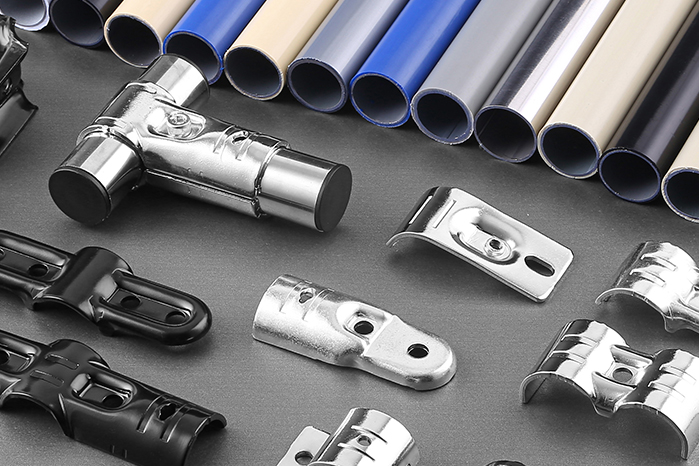
In the high-stakes environment of industrial manufacturing, the reliability of floor equipment is a direct driver of profitability. The lean tube system has revolutionized how factories approach modularity, offering a flexible alternative to permanent structures. However, as with any precision-engineered industrial tool, the performance of these systems is only as consistent as the maintenance protocols supporting them. For facility managers and operations directors, understanding the lifecycle of a lean tube is essential to preventing downtime and ensuring worker safety.
Effective maintenance is not merely about fixing what is broken; it is about proactive optimization. Because these systems are designed for constant reconfiguration and movement, they are subject to unique mechanical stresses that differ from static shelving. To maintain peak performance, a systematic approach to inspection, cleaning, and structural auditing must be integrated into the facility’s standard operating procedures (SOPs).
Structural Integrity: The Importance of Torque and Alignment
The primary advantage of a modular system—its ability to be disassembled and rebuilt—is also its primary maintenance focus. The stability of a workstation or flow rack depends entirely on the friction-grip between the metal joints and the pipe surface.
- Joint Tension Audits: Over time, vibrations from factory floor machinery or the repetitive loading and unloading of heavy bins can cause joint bolts to settle. A monthly “torque check” is recommended. Maintenance teams should use calibrated hexagonal keys to ensure that every interlocking joint remains tightened to the manufacturer’s specified Newton-meters.
- Alignment and Squaring: A lean tube system performs best when load distribution is symmetrical. If a rack becomes misaligned due to impact from a forklift or improper manual handling, the center of gravity shifts. This puts uneven stress on specific joints, potentially leading to deformation. Regularly using a spirit level to ensure vertical posts remain perpendicular to the flooris a simple yet effective preventative measure.
Surface Protection and Environmental Resistance
The longevity of a lean tube is often determined by the integrity of its outer coating. Whether the system uses a PE (Polyethylene) coating, an ABS layer, or a stainless steel finish, the surface serves as the first line of defense against oxidation.
In chemical processing or high-humidity electronic assembly environments, the coating prevents the inner cold-rolled steel from corroding. Maintenance staff should inspect pipes for deep gouges or abrasions that penetrate the plastic layer. If the steel core is exposed to the atmosphere, localized rusting can occur, which weakens the structural wall of the pipe. For 2B environments where hygiene is critical, such as cleanrooms, wiping down the tubes with non-abrasive, pH-neutral cleaners ensures that dust accumulation does not interfere with the movement of sliding components or roller tracks.
Optimizing Moving Parts: Roller Tracks and Casters
Many lean systems incorporate dynamic elements like gravity-fed roller tracks or heavy-duty casters for mobile kitting carts. These are the components most susceptible to wear and tear.
- Debris Clearance: In wood processing or metal machining facilities, fine particulate matter can lodge in the axles of roller tracks. This increases friction, forcing operators to use more manual force to move bins, which contradicts the ergonomic goals of lean manufacturing. Compressed air should be used weekly to clear tracks.
- Caster Lubrication: For mobile units, the swivel bearing and the wheel axle require periodic lubrication. Flat spots on wheels—caused by dragging a cart with locked brakes—should be addressed immediately by replacing the caster to prevent floor damage and excessive vibration.
The Role of Design in Maintenance Reduction
A significant portion of maintenance is determined at the design phase. A well-engineered lean tube system utilizes triangulation and bracing to minimize the mechanical load on individual fasteners. When a system is over-engineered for its specific load requirement, the frequency of necessary repairs drops significantly. This “set and forget” reliability is what separates premium industrial components from low-grade alternatives.
Excellence in Modular Infrastructure: The JunYi Standard
At JunYi, we recognize that for our B2B partners, equipment maintenance is a labor cost that must be minimized through superior product engineering. As a dedicated manufacturer and provider of OEM/ODM services, we focus on the metallurgical quality of our pipes and the precision casting of our joints to ensure that our systems remain stable under the rigors of 24/7 industrial shifts.
When you integrate a lean tube from our production line into your facility, you are benefiting from a product designed for high-cycle industrial use. Our pipes feature consistent wall thickness and high-adhesion coatings that resist the typical peeling and cracking found in budget-grade materials. This inherent durability means that the “maintenance” required for our systems is often limited to basic visual inspections rather than costly component replacements.
Professional OEM/ODM Support for Global Industries
We understand that every manufacturing niche—from automotive assembly to pharmaceutical logistics—has different maintenance challenges. Our ODM services allow us to tailor the specifications of the lean tube system to meet the specific environmental stresses of your industry. If your facility requires high-heat resistance or ESD (Electrostatic Discharge) protection, we provide specialized materials that maintain their structural properties where standard pipes might fail.
As your strategic partner, we at JunYi are committed to more than just the initial sale. We provide the technical documentation and structural guidance necessary for your maintenance teams to keep your modular infrastructure in top condition. By choosing our high-performance components, you are investing in a system that supports the principles of Kaizen: continuous improvement backed by reliable, low-maintenance hardware.
Through the combination of robust material science and your facility’s proactive care, a modular system can provide years of peak performance. Let us help you design a workspace that is as durable as it is flexible.