Flow rail pallet racks are workhorses of high-density warehousing. They enable FIFO inventory management, reduce forklift travel, and maximize vertical storage space. But they also endure punishing conditions: heavy pallets entering at speed, continuous rolling friction, and the cumulative fatigue of thousands of load cycles. Over time, even well-designed racks develop structural weaknesses. Reinforcement is not optional—it is essential for maintaining safety, performance, and service life.
Where Flow Rail Racks Typically Weaken Under Load
Understanding where failure occurs is the first step toward effective reinforcement. Flow rail pallet racks typically weaken at four critical points: support columns, horizontal beams, track-to-frame connections, and the roller tracks themselves. Each point experiences different forces and requires different reinforcement techniques.
Support columns bear the entire vertical load of the rack and its contents. Over time, repeated loading and unloading can cause column deflection, particularly in racks subjected to uneven pallet placement. Horizontal beams span the width of the rack and support the flow rails. Beam sagging is a common issue in older racks or those loaded beyond their rated capacity.
Track-to-frame connections are where the flow rails attach to the support structure. These connections experience shear forces as pallets move along the rails. Loose or worn connections allow track movement, which accelerates wear on both the tracks and the pallets themselves.
The roller tracks, finally, endure continuous abrasion and impact. Roller deformation, bearing wear, and track bending all reduce system performance and create safety hazards.
Reinforcing the Support Frame
Frame reinforcement starts with the columns. Hot-rolled structural channel columns with full horizontal-diagonal bracing provide the foundation for any reinforced rack system. For existing racks, additional bracing can be retrofitted between columns to distribute loads more evenly and resist lateral forces.
Cross-bracing is one of the most effective frame reinforcement techniques. Install diagonal braces between adjacent columns at each tier level. These braces convert lateral forces into tension and compression loads that the columns can handle more effectively than bending loads. The result is a frame that resists rack sway and maintains vertical alignment under load.
Column base plates deserve attention as well. Reinforcing the connection between the column and the floor prevents settlement and maintains vertical alignment. Use anchor bolts with adequate shear strength and ensure the base plate is large enough to distribute the column load across the floor surface. For racks installed on uneven floors, adjustable shims can correct alignment issues before they become structural problems.
Strengthening Track-to-Frame Connections
The connection between the flow rail and the support frame is the most dynamic point in the system. Every pallet that enters or exits the rack applies force to this connection. Over time, fasteners loosen, connection points wear, and tracks begin to move independently of the frame.
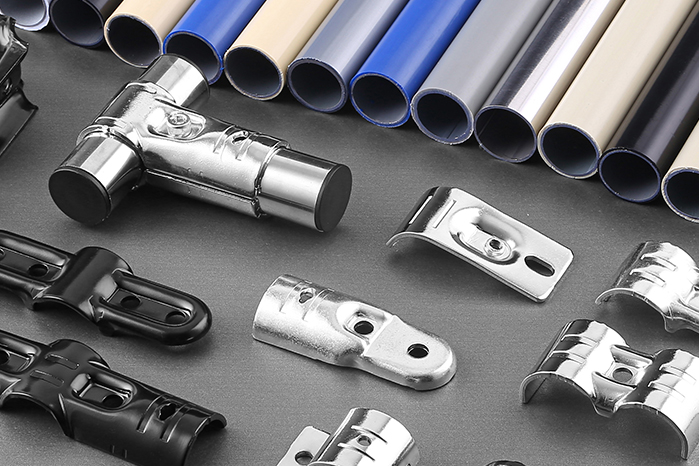
Roller track joints are fasteners that fixedly connect the rail and the wire rod. These joints are made through stamping and welding processes. Reinforcing these joints starts with selecting the right joint type for the application. For heavy-duty pallet flow applications, reinforced frame rails withstanding dynamic pallet loads are essential.
Retrofitting existing connections can be as simple as upgrading fasteners. Replace standard bolts with higher-grade hardware. Retrofitting existing connections may involve upgrading fasteners or adding reinforcement plates where necessary. The appropriate method should be selected according to the rack design and load conditions.
Reinforcing the Roller Tracks Themselves
The roller tracks are the most directly stressed components in a pallet roller track system. Pallets entering the rack at speed apply impact forces that can deform track rails. Continuous rolling friction wears rollers and bearings. Heavy loads cause track deflection that increases rolling resistance and accelerates wear.
Track rail reinforcement starts with material selection. Heavy-gauge materials prevent deformation under continuous use. For existing tracks showing signs of deformation, replacement with heavier-gauge track is the most reliable solution.
Roller replacement is another reinforcement technique. Standard rollers may not withstand the demands of heavy pallet flow applications. Upgrading to rollers with sealed bearings, higher load ratings, or specialized materials reduces rolling resistance and extends service life. For applications with sensitive products, consider ESD-safe rollers that prevent static discharge while maintaining smooth operation.
Managing Dynamic Load Impact
Structural reinforcement is not just about static strength. Dynamic loads—pallets entering the rack at speed—apply forces that static load ratings do not capture. Managing these dynamic forces is essential for long-term structural integrity.
Entry guide rails ensure proper pallet alignment during loading. These guides prevent off-center impacts that apply uneven forces to the track and frame. For reinforced systems, consider extending guide rails beyond the rack face to provide more alignment tolerance during forklift entry.
Speed control devices reduce the impact force of entering pallets. Self-energized speed controllers act as gentle brakes, slowing pallets as they move down the flow rails. By reducing impact speed, these devices protect both the pallet and the rack structure from the forces that cause deformation and loosening.
Implementation Sequence for Reinforcement
Reinforcement is most effective when implemented in a logical sequence. Start with the support frame. Address column bracing, beam supports, and base plate connections before moving to the track level. A stable frame provides the foundation for all subsequent reinforcement work.
Next, address the track-to-frame connections. Upgrade fasteners, add gusset plates, and verify connection spacing. These connections transfer loads between the dynamic track system and the static frame. Weak connections undermine even the strongest frame and tracks.
Finally, address the tracks themselves. Replace worn rollers, verify alignment, and add reinforcing strips where needed. Track-level reinforcement delivers the most immediate performance improvement because it directly affects how pallets move through the system.
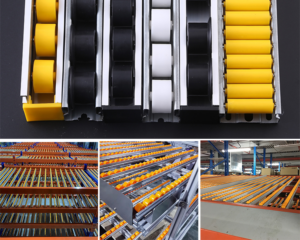
At Junyi, we manufacture roller track components designed to improve material flow and reduce operating resistance. For example, our JY-2045 features built-in wear-resistant combination rollers with a low friction coefficient, enabling smooth movement of pallets and turnover boxes while reducing manual pushing resistance. Its inclined installation uses gravity to support automatic material flow, helping reduce energy consumption and improve handling efficiency in flow rail pallet rack systems.
Reinforcing a flow rail pallet rack is not a single action. It is an ongoing process of identifying weak points, applying targeted reinforcement techniques, and verifying the results. Start with the frame, strengthen the connections, reinforce the tracks, and manage dynamic loads.
Follow this sequence and the rack will deliver reliable performance over years of service—handling heavy pallets, continuous use, and the demanding conditions of high-density warehousing.