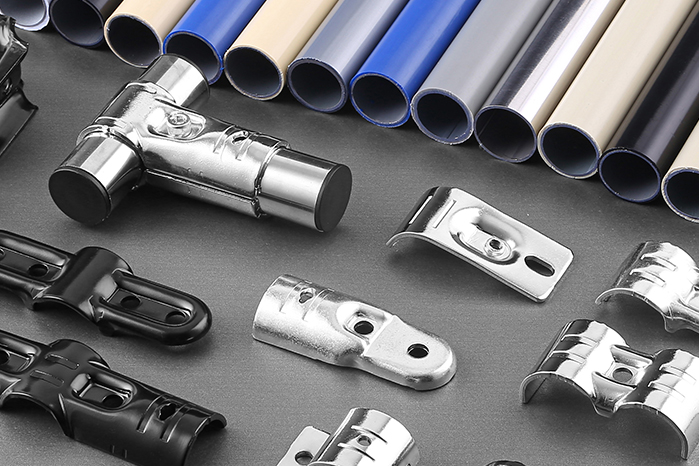
In the modern lean manufacturing landscape, the “one-size-fits-all” approach to material handling is rapidly becoming obsolete. As factories strive for higher efficiency and better ergonomics, the ability to design and assemble bespoke equipment in-house has become a significant competitive advantage. For 2B operations—ranging from automotive assembly to pharmaceutical logistics—the modular “pipe and joint” system is the gold standard for this flexibility. Learning how to construct a high-performance mobile cart using a plastic coated tube is not just a DIY skill; it is a fundamental exercise in industrial engineering and workflow optimization.
The Structural Foundation: Selecting the Right Coated Pipe
The first step in engineering a custom mobile cart is understanding the material science of the frame. While raw steel tubing offers strength, it lacks the surface characteristics required for high-traffic industrial environments. A high-quality coated pipe addresses these deficiencies by fusing a cold-rolled steel core with a high-density polyethylene (PE) outer layer.
The physics of this composite material is what makes it ideal for mobile structures. The steel provides the necessary tensile strength to support heavy loads—often up to several hundred kilograms depending on the frame geometry—while the plastic coating provides a high-friction surface for metal joints to grip. In a 2B environment, “joint slip” is a primary safety concern. The chemical bonding between the steel and the plastic coated tube ensures that when a metal connector is tightened to the specified torque, the structural integrity of the cart remains rigid, even when subjected to the constant vibrations of a factory floor.
Design Principles for Industrial Mobile Carts
When designing a custom cart, engineers must account for the “Center of Gravity” (CoG) and “Dynamic Loading.” A cart that is stable when stationary may become hazardous when in motion, especially if it is top-heavy. By using a modular coated pipe system, designers can easily lower the CoG by placing heavier components on the bottom shelf and using lightweight configurations for the upper tiers.
Another critical consideration is the “Moment of Inertia.” Long, unsupported spans of pipe can flex under heavy loads, leading to structural fatigue over time. To counteract this, industrial designers utilize “triangulation”—adding diagonal bracing using shorter lengths of plastic coated tube. This transforms a simple rectangular frame into a rigid truss system, significantly increasing the load capacity without adding the excessive weight associated with traditional welded square-tubing.
Step-by-Step Assembly for Professional Grade Results
Building a professional-grade mobile cart requires precision and a systematic approach. Unlike permanent welded structures, a pipe and joint system allows for iterative testing and adjustment.
- Cutting to Specification: Using a high-speed pipe cutter ensures that the ends of the coated pipeare square and burr-free. This is essential for ensuring that the pipe seats fully within the metal joint, maximizing the contact surface area.
- Base Construction: Always start from the ground up. The base frame must be perfectly square to ensure that the industrial casters track correctly. Any misalignment in the base will lead to “crabbing,” where the cart pulls to one side during transport.
- Vertical Integration: Once the base is secure, vertical supports are added. Because the plastic coated tube is lightweight, a single technician can typically manage the assembly, significantly reducing the “Man-Hours” required for facility upgrades.
- Hardware Selection: The interface between the pipe and the caster is critical. For heavy-duty 2B applications, “expanding stem” casters or “bolt-on” base plates are preferred to ensure the wheels remain permanently attached under high shear forces.
Manufacturing Excellence: The JunYi Advantage
At JunYi, we don’t just provide materials; we provide the building blocks of industrial innovation. As a dedicated 2B partner specializing in OEM and ODM services, we understand that the reliability of your custom carts depends entirely on the quality of the components used. Our manufacturing process for the plastic coated tube is engineered to meet the highest international standards for durability and precision.
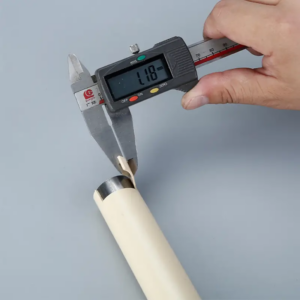
We recognize that for our clients in the manufacturing and logistics sectors, consistency is the highest priority. A variation of even half a millimeter in pipe diameter can compromise the safety of a modular joint system. This is why we employ rigorous quality control measures throughout our production line, ensuring that every coated pipe that leaves our facility is perfectly calibrated for industrial use.
Why Choose Us for Your OEM/ODM Needs?
Our business model is designed to support the complex requirements of large-scale industrial operations. We understand that your facility requires more than just “off-the-shelf” solutions. By partnering with us, you gain access to a manufacturing powerhouse capable of tailoring products to your specific operational needs.
- Superior Coating Adhesion: A common failure in lower-grade products is the delamination of the plastic from the steel. Our plastic coated tube features a specialized adhesive layer that prevents the PE from peeling, even when the pipe is subjected to the high-torque clamping forces required for heavy-duty carts.
- Customization and Scalability: As an ODM provider, we can adjust the wall thickness of the steel or the formulation of the plastic coating to suit your environmental needs—whether that involves high chemical resistance or specialized color-coding for “5S” workplace organization.
- Technical Support for 2B Clients: We work closely with your engineering and procurement teams to provide the technical data sheets and load-bearing calculations necessary for safety compliance in modern factories.
Sustaining Lean Infrastructure
We believe that the flexibility of your infrastructure should match the speed of your innovation. By using our coated pipe solutions, your maintenance teams can respond to workflow changes in real-time, building new carts, workstations, or flow racks without the need for specialized welding equipment or expensive external contractors.
At JunYi, we are committed to being the “silent partner” in your facility’s success. Our focus on high-quality manufacturing ensures that when you build with our tubes, you are building for the long term. We invite you to experience the difference that professional-grade materials can make in your material handling systems. Whether you are looking for a high-volume OEM supplier or a collaborative ODM partner to develop a new line of modular equipment, we are ready to help you move your business forward.