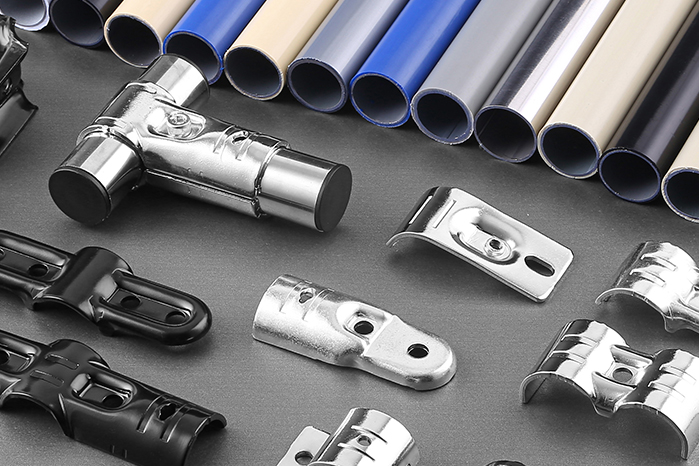
In the current era of industrial transformation, the “fixed” assembly line is a relic of the past. Modern manufacturing thrives on adaptability, and the lean pipe system has become the primary infrastructure for this flexibility. Often referred to as “pipe and joint” systems, these modular frameworks allow companies to design, build, and reconfigure workstations, flow racks, and material handling carts on demand. However, for 2B procurement managers and facility engineers, selecting a system is not as simple as choosing a color. It requires a technical evaluation of load dynamics, material longevity, and environmental compatibility.
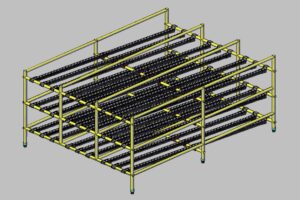
The Science of Lean Systems: Understanding the Components
A lean pipe system is more than just a collection of tubes; it is a meticulously engineered structural solution. The system’s integrity relies on the synergy between the lean tube and its mechanical connectors. From a physics perspective, these systems must manage three types of stress: tension, compression, and shear.
- The Substrate: Most industrial systems utilize a cold-rolled steel core. The wall thickness (typically ranging from 0.8mm to 2.0mm) determines the pipe’s resistance to “bending moments.” A thinner wall is suitable for light-duty kitting carts, while high-density gravity flow racks require thicker walls to prevent structural deflection under the weight of full pallets.
- The Coating: The external layer is not just for aesthetics. Whether it is Polyethylene (PE), ABS, or a stainless steel finish, this layer determines the system’s resistance to chemicals, impact, and UV degradation.
- The Clamping Force: The connectors—or joints—rely on friction to hold the tubes in place. High-quality systems use 2.5mm thick steel joints that provide a 360-degree grip, ensuring that the structure does not “creep” or slip over time due to industrial vibrations.
Key Factors in the Selection Process
When sourcing a system for a large-scale facility rollout, professional buyers should focus on the following four technical criteria:
- Load-to-Weight Ratio
Efficiency in lean manufacturing is often about reducing “dead weight.” The goal is to select a lean tube that provides maximum structural rigidity with minimum mass. Stainless steel tubes offer the highest strength-to-weight ratio and superior corrosion resistance but come at a higher price point. For most assembly environments, PE-coated steel pipes provide the most cost-effective balance of durability and capacity.
- Environmental and ESD Requirements
In electronics and semiconductor manufacturing, the “invisible” threat of Electrostatic Discharge (ESD) is a primary concern. Standard plastic-coated pipes act as insulators. If your facility handles sensitive components, you must specify a lean pipe system with conductive coatings and joints that ensure a continuous path to ground.
- Versatility and Reusability
The true ROI of a lean system is found in its second, third, and fourth lives. A high-quality system can be disassembled and rebuilt hundreds of times. Buyers should ensure that the joint surface treatments (such as black electrophoresis or chrome plating) are durable enough to withstand repeated tightening without chipping or losing their “bite” on the pipe.
- Standardization and Compatibility
Most global lean systems utilize the 28mm diameter standard. Choosing a supplier that adheres strictly to these tolerances ensures that your new components will be compatible with your existing inventory, preventing “orphaned” parts in your warehouse.
JunYi: Your Global Manufacturing Partner for Lean Infrastructure
At JunYi (Shenzhen Junyi Storage Equipment Co., Ltd.), we specialize in the engineering and high-volume production of the structural components that form the backbone of modern factories. We understand that in the 2B sector, you are not just looking for a vendor—you are looking for an OEM/ODM partner that can guarantee the structural reliability of your facility designs.
Our lean pipe system products are manufactured using premium-grade materials and advanced extrusion techniques, ensuring that every lean tube we ship meets the exact specifications required for heavy-duty industrial use.
Technical Specifications of the JunYi System
We provide a comprehensive range of tubing options to meet diverse industrial needs. Our specifications are sourced directly from our precision manufacturing standards:
Customization and OEM Excellence
What sets JunYi apart is our ability to provide tailored ODM solutions. We recognize that a “one size fits all” approach does not work for complex 2B logistics. Through our manufacturing facilities, we can offer:
- Custom Color Palettes: Facilitate visual management (5S) by ordering pipes in specific brand or safety colors.
- Specialized Internal Treatments: Our pipes can be treated with internal anti-corrosion coatings to ensure longevity in high-humidity coastal environments.
- Precision Cutting Services: To reduce on-site labor costs for our partners, we provide precision-cut pipes based on your CAD blueprints, allowing for immediate assembly upon delivery.
By choosing JunYi as your primary supplier, you are investing in a system designed for the rigors of 24/7 industrial operations. Our lean tube solutions are tested for impact resistance and load deflection, ensuring that your workstations and flow racks provide a safe and stable environment for your workforce.
In the competitive world of industrial supply, the strength of your facility lies in the quality of its foundation. We invite facility designers and procurement leads to collaborate with us to build a more efficient, modular, and resilient production floor.