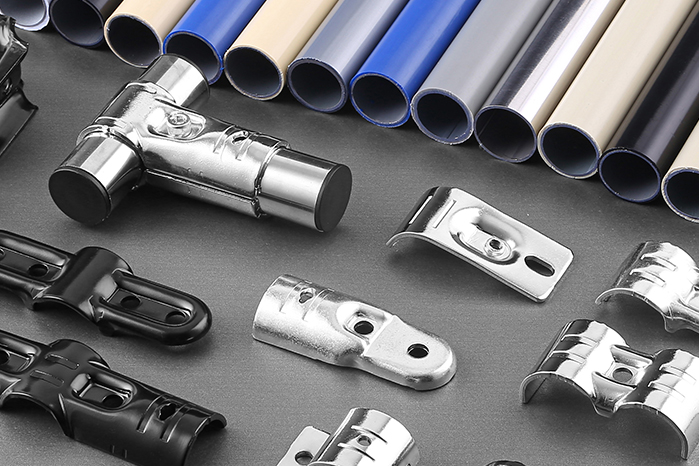
In the modern industrial landscape, “agility” is the primary metric of success. The ability to pivot a production line, reconfigure a warehouse, or optimize a workstation without weeks of lead time is what separates market leaders from their competitors. The fundamental tool facilitating this movement is the lean tube, a versatile structural component that serves as the “DNA” of a modular facility.
By replacing permanent, welded structures with a high-performance lean pipe system, 2B enterprises can create an environment where the physical workspace evolves alongside their operational needs. Understanding the strategic locations to deploy these systems is essential for maximizing floor efficiency and operator productivity.
The Science of Modular Utility
From a popular science perspective, the lean tube system operates on a “Cellular” structural logic. Much like biological cells that can be reorganized to form different tissues, these pipes and joints allow for the creation of diverse industrial “organs”—from gravity-fed lungs that move inventory to ergonomic workstations that serve as the brain of the assembly process.
The technical brilliance of the system lies in its mechanical simplicity. A 28mm cold-rolled steel pipe, encased in a protective polymer coating, is secured by high-tension metal joints. This creates a high strength-to-weight ratio, allowing for the construction of rigid frames that are light enough to be moved by a single operator but strong enough to support hundreds of kilograms of industrial inventory.
- Ergonomic Assembly Workstations
The most common and impactful application for a lean pipe system is the custom assembly workstation. Traditional industrial benches are “one size fits all,” which often leads to ergonomic waste—unnecessary reaching, bending, and straining.
With lean tube components, facility engineers can design stations tailored to the specific height and reach of the operator. These stations can integrate overhead lighting, tool balancers, and angled parts bins. Because the system is modular, if a new tool is introduced or the assembly sequence changes, the station can be modified in minutes using nothing more than a hex wrench.
- FIFO Gravity Flow Racks
In logistics and kitting areas, managing inventory rotation is a constant challenge. Gravity flow racks built with a lean pipe system utilize sloped lanes equipped with roller tracks to ensure First-In, First-Out (FIFO) movement.
By utilizing these racks, factories eliminate “dead inventory” trapped at the back of a shelf. When a worker pulls a bin from the front, gravity brings the next unit forward. This self-replenishing logic reduces the footprint of the storage area and ensures that material handlers spend less time searching for parts and more time fulfilling orders.
- Material Handling and “Milk Run” Carts
Lean manufacturing often utilizes “Milk Run” logistics—small, frequent deliveries of parts to the assembly line. Heavy, motorized forklifts are often too cumbersome for these tasks. Custom-built carts made from lean tube frames are the ideal solution.
These carts can be designed with specialized slots for specific sub-assemblies, protecting delicate components from damage during transport. Because the system is lightweight, it minimizes the “initial push force” required by operators, directly reducing the risk of musculoskeletal injuries on the factory floor.
- Visual Management and Safety Perimeters
Beyond structural storage, the lean pipe system is an excellent tool for 5S visual management. By using color-coded pipes (e.g., yellow for caution zones, green for “Work in Progress”), facilities can create intuitive visual cues for staff. These pipes can be used to build safety railings, pedestrian barriers, and mobile shadow boards for tools, ensuring that every square meter of the facility is organized and safe.
JunYi: Your Manufacturing Partner for Modular Excellence
At JunYi (Shenzhen Junyi Storage Equipment Co., Ltd.), we specialize in the high-precision manufacturing of the components that make these applications possible. We understand that in a 2B environment, you aren’t just buying materials—you are investing in the reliability of your infrastructure.
As a dedicated OEM and ODM provider, we focus on the technical integrity of the lean tube. Our manufacturing process ensures that every pipe has a consistent wall thickness and a perfectly bonded coating, which is critical for maintaining the clamping force of the joints over time.
Technical Specifications of the JunYi System
We provide a range of specifications to meet the diverse load-bearing and environmental needs of our global partners:
Why Professional Integrators Choose JunYi
Choosing JunYi as your supply partner means accessing a level of customization that consumer-grade vendors cannot provide. Through our ODM services, we can customize the length, color, and thickness of your lean pipe system components to match your specific engineering blueprints.
We recognize that for our B2B clients, the “Total Cost of Ownership” is what matters. Our pipes are tested for impact resistance and surface durability, ensuring that they do not chip or rust even in high-traffic factory environments. By using our structural solutions, you are ensuring that your facility remains a “living” workspace—capable of adapting to the next decade of industrial innovation.
Whether you are designing a new distribution center or retrofitting an existing assembly line, JunYi provides the fundamental building blocks for a smarter, leaner, and more efficient facility.