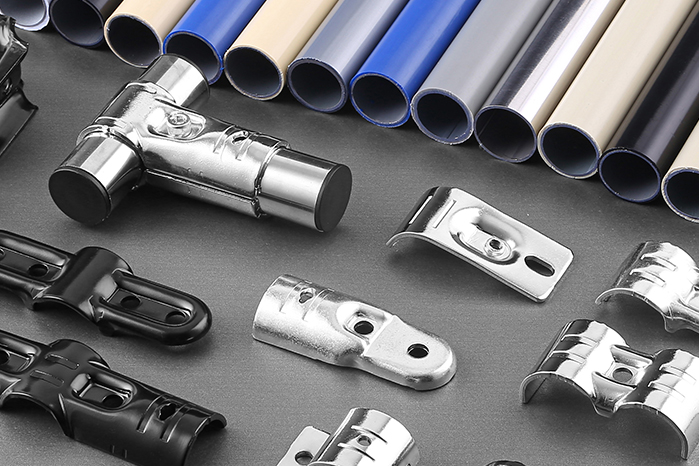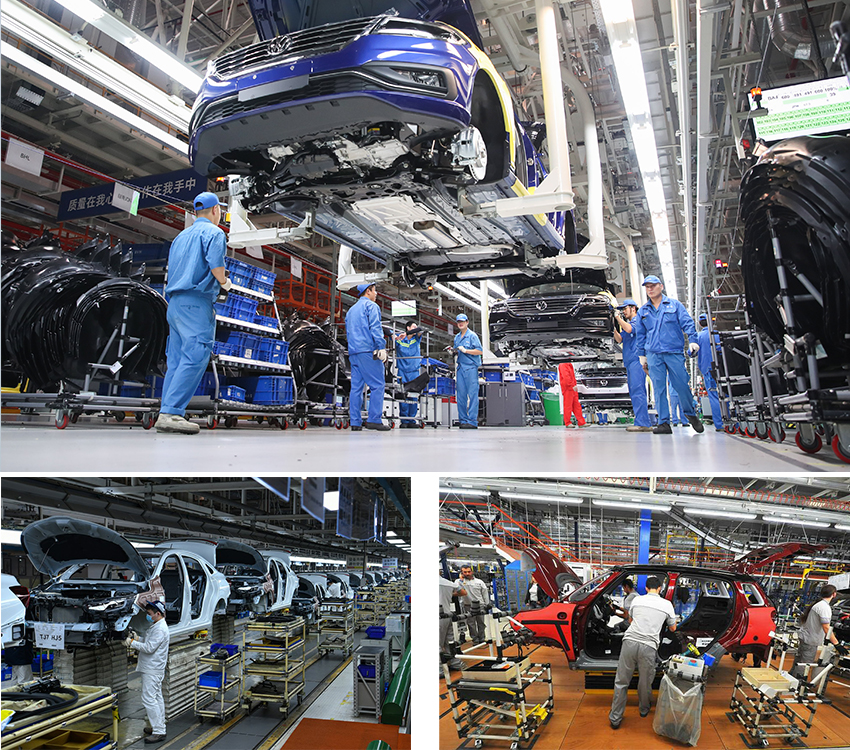
Walk through any modern automotive assembly plant and you will see them: modular structures built from coated steel pipe, supporting everything from component assembly to parts presentation. At Junyi, our black coated pipe is designed for the demanding structural requirements of automotive assembly environments. Its combination of durability, flexibility, and clean appearance makes it particularly well-suited to the demanding conditions of automotive production.
Assembly Workstations and Benches
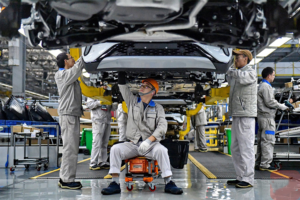
The most visible structural application of coated pipe in automotive assembly is the workstation. These are not generic tables. They are purpose-built structures designed around specific assembly processes, operator ergonomics, and parts flow requirements.
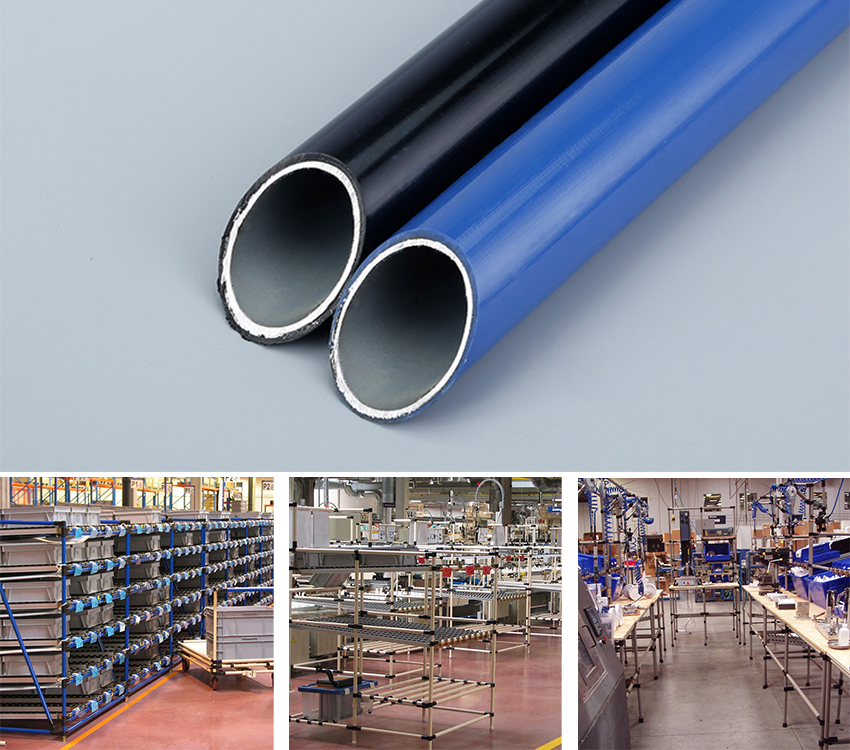
A typical automotive assembly workstation built from 28mm plastic-coated steel pipe supports a plastic work surface across the front, with shelving above for part storage and additional shelving below for supplies. The structure can be configured as stand-up or sit-down, set up in a straight line or a U-shape to support one-piece-flow assembly practices. This flexibility is not optional in automotive assembly—production lines change as vehicle models evolve, and the structural system must change with them.
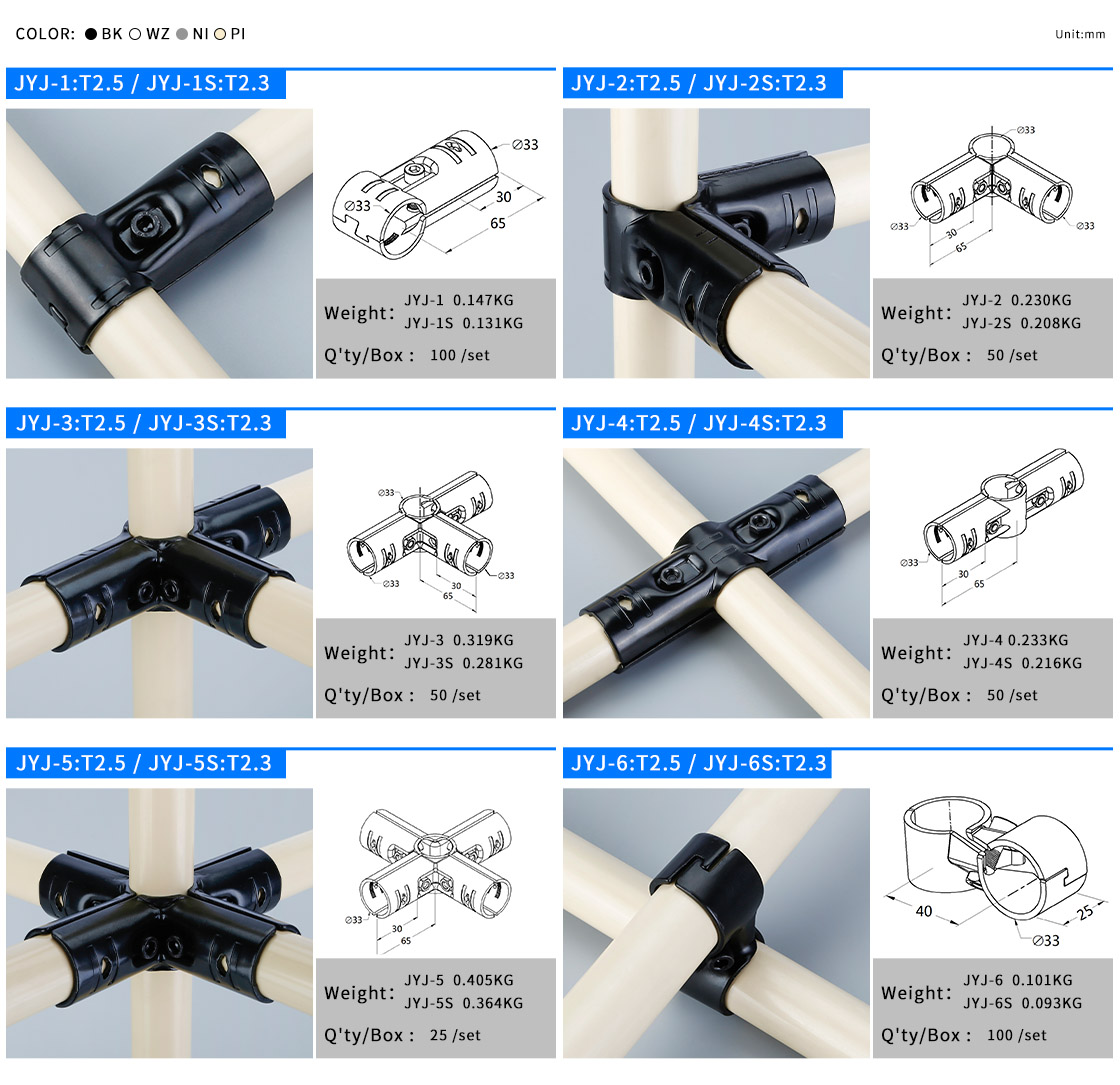
The structural integrity of these workstations depends on proper engineering. Standard 28mm pipe with metal joints provides load capacities up to 600 pounds for mobile configurations. For heavier duty applications, some systems offer 42mm pipe. The black coated pipe delivers the strength needed for structural frames while the coating protects against scratches, oils, and the general wear of a busy assembly floor.
Material Handling Carts and Transport Frames
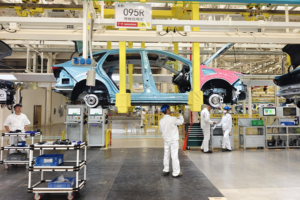
Beyond stationary workstations, black coated pipe serves as the structural backbone for material handling equipment throughout automotive assembly areas. These are not simple push carts. They are engineered transport frames designed to move components, subassemblies, and finished parts between workstations.
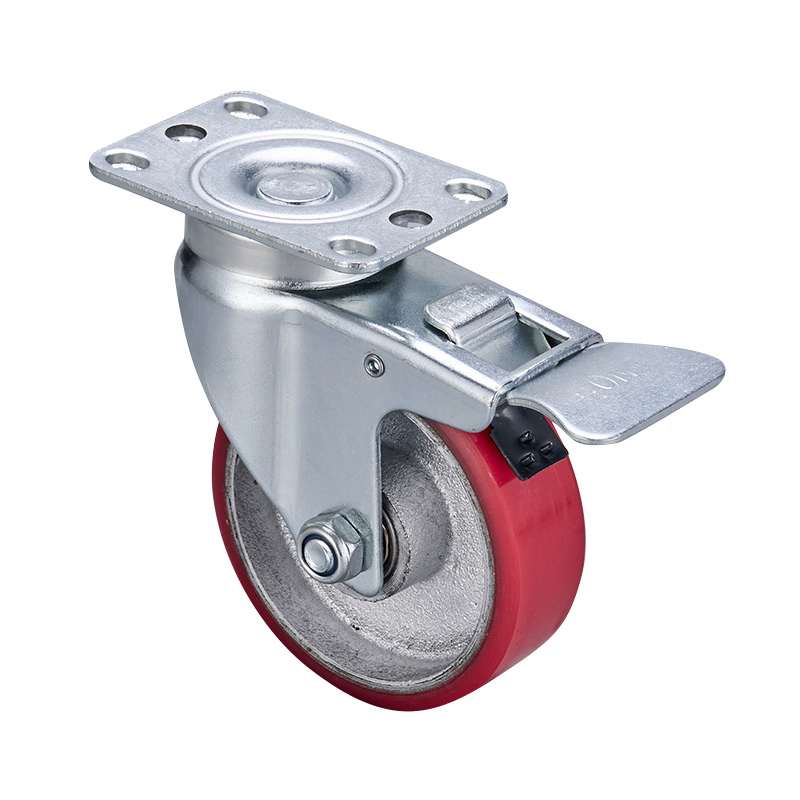
The structural demands here differ from stationary applications. Mobile structures must withstand the dynamic loads of movement—vibration from uneven floors, impacts from loading and unloading, and the forces of acceleration and deceleration. Industrial-duty stem casters attach directly to the coated pipe frame, making these structures easy to reposition for layout changes or housekeeping.
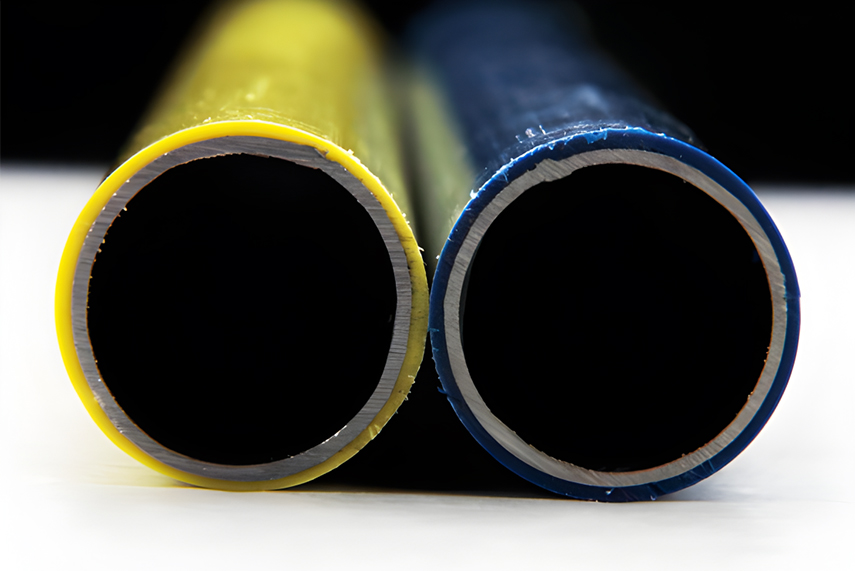
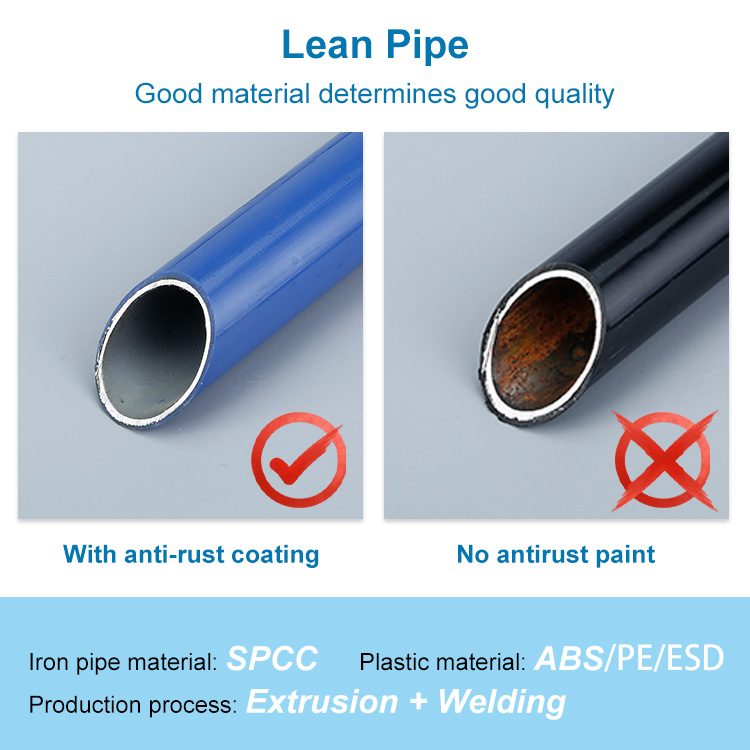
The coating on the pipe serves a critical structural function in these mobile applications. The PE plastic layer, typically 1.2mm thick with an inner wall treated with anti-rust paint, protects the steel core from moisture and corrosion. This matters because automotive assembly areas are not dry environments.
Coolants, lubricants, and cleaning agents are present. Uncoated steel would corrode; black coated pipe maintains its structural integrity over years of service.
Line-Side Racking and Parts Presentation
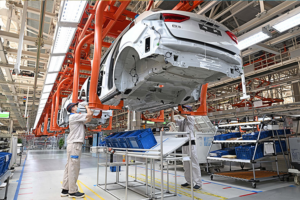
Line-side storage presents a different set of structural requirements. Parts must be presented to assembly workers in the correct sequence, at the correct height, with minimal reaching or bending. Black coated pipe structures solve this problem through flow lanes and angled presentation.
Flow lanes built from coated pipe provide first-in, first-out parts handling. The structural frame supports totes or bins at an angle that enhances visibility and physical access to parts. At the top of these structures, additional flow lanes return empty totes to the rear for restocking. This is not just material handling—it is structural engineering applied to production flow.
The structural design must account for load distribution across multiple levels. A single coated pipe and slide has a safe load-bearing capacity of approximately 30kg at a 600mm horizontal distance.
Vertical columns must support the ground at maximum horizontal intervals of every 600mm, with direct ground connections every 1200mm. These are not arbitrary rules; they are structural requirements derived from the material properties of the pipe and the loads it must carry.
Mobile Equipment and Ergonomic Aids
Automotive assembly areas use black coated pipe for structures that move with the production line itself. These include overhead tool rails, adjustable fixture stands, and ergonomic support equipment that follows the assembly process.
The structural advantage of coated pipe in these applications is its reconfigurability. The modular design allows users to add only the accessories needed and configure the structure that works best today—then change it tomorrow as needs change.
This is not a theoretical benefit. Automotive assembly lines are reconfigured regularly for model changes, production volume adjustments, and continuous improvement initiatives. Structural systems that cannot adapt become liabilities.
Accessories attach directly to the coated pipe structure: overhead lights, computer screens, additional flow lanes, drawers, information sheet holders, label holders, tool storage, and hooks. Each accessory adds functional capability without compromising the structural integrity of the frame.
Why Black Coated Pipe Fits Automotive Assembly
The structural applications of black coated pipe in automotive assembly are not limited to what is listed here. Every plant has unique requirements, and the modular nature of coated pipe systems means new applications emerge constantly.
What remains constant is the structural logic: steel provides the strength, coating provides the protection, and modular joints provide the flexibility that automotive assembly demands. That is why black coated pipe continues to be specified wherever production efficiency and structural reliability must coexist.