Fast-moving flow rails can become surprisingly noisy as rollers, bearings, packages, and support frames interact at high speed. High decibel levels in distribution hubs create challenging environments while signaling mechanical inefficiencies.
At Junyi, we specialize in modular components designed to dampen operating stress and help keep passageways quiet. The first step in successfully reducing noise across a moving industrial roller track is to understand what produces it.
Pinpointing Mechanical Noise Sources in Fast-Moving Flow Systems
Package speed, wheel condition, and frame resonance all influence noise generation during daily operations. When heavy containers move rapidly across gravity rails, kinetic energy transfers dynamically through wheels, axles, and brackets.
Rapid wheel rotation creates high-frequency chatter if internal tolerances fluctuate under heavy daily load conditions. Containers striking rigid side guide rails create sudden impact spikes that echo across the facility floor.
Unshielded steel frame profiles act as sounding boards, amplifying micro-vibrations created by spinning wheels. Identifying whether noise originates from rollers, bearings, impact points, or structural frames guides targeted fixes. Addressing acoustic issues at the immediate point of contact yields noticeable decibel reductions across active production areas.
Regular inspection of running lines reveals where physical wear accelerates surface chatter. Conveyance paths with heavy vibration often show uneven wear on guidance channels.
Stopping acoustic energy from traveling through support posts protects adjacent workstations from unnecessary sound exposure. Upgrading isolated contact points remains far more cost-effective than replacing complete handling systems.
Maintaining smooth wheel surfaces across roller tracks prevents rhythmic thumping during parcel transit. Minor surface flat spots generate continuous clicking noises as packages pass over at higher speeds. Evaluating physical contact zones isolates whether noise stems from cargo weight or mechanical alignment.
Optimizing Roller Wheel Materials and Bearing Dynamics
Wheel material selection serves as the primary defense against contact noise during high-speed carton transit. Solid steel wheels produce harsh metallic clicking sounds when colliding with hard plastic totes or heavy wooden pallets.
Replacing rigid metal wheels with suitable polymer rollers can reduce impact noise while maintaining smooth material movement. Synthetic polymer compounds cushion package contact while preserving rotational efficiency under weight.
Internal axle and bearing design also dictates acoustic performance over extended operating cycles in busy facilities. Precision-fitted steel axles eliminate internal mechanical play that allows wheels to wobble and rattle during fast conveyance tasks.
Smooth surface finishes and tight radial tolerances minimize rotational friction across the assembly. Deploying an industrial roller track equipped with smooth-spinning thermoplastic wheels prevents airborne squeals across sorting zones.
Sealed precision bearings keep fine dust and cardboard fibers from entering internal raceways. Contaminated bearings generate grinding noises long before complete mechanical seizure occurs.
Selecting enclosed bearing housings extends component service life while maintaining quiet rolling action. High-quality bearing assemblies ensure low acoustic output throughout multi-shift operational schedules.
Dampening Frame Resonance and Joint Vibration
Vibration traveling from active wheels into supporting steel framing creates low-frequency humming throughout large industrial spaces. Open structural profiles amplify minor mechanical vibrations into background noise during peak shifts. Installing rubber isolation pads between mounting brackets and support beams isolates the frame from localized shock.
Roller to bracket and frame to beam connection points form the primary path for acoustic energy across the rack structure. Isolating these interfaces prevents vibration from building into systemic frame resonance across the assembly. Simple dampening inserts installed at key mounting points help reduce overall acoustic output in busy work areas.
Loose structural connections worsen frame chatter as heavy packages pass over individual joint interfaces continuously. Maintenance technicians must maintain proper fastener torque on all bracket connections and pipe joints across the assembly. Securing roller tracks to rigid support channels reduces rattling during heavy sorting shifts while controlling operational noise effectively.
Pitch Angle Adjustments and Impact Zone Buffering
Gravitational acceleration directly influences package speed, impact force, and resulting noise levels at terminal discharge points. Excessive track gradients increase parcel velocity unnecessarily, causing containers to slam violently into end stops or downstream conveyance belts.
Fine-tuning inclination angles ensures goods maintain steady momentum without gaining excess speed that creates loud end-of-lane collisions. Controlled velocity preserves quiet operation across extended gravity-fed flow runs.
Adding deceleration devices or impact-absorbing end stops further buffers acoustic spikes during heavy container arrivals at the dock. Polyurethane bumpers, spring-loaded stops, and braking wheels absorb kinetic energy gently at line discharge zones.
Planners should evaluate entry guide rails carefully, ensuring smooth package alignment as totes transition onto an industrial roller track. Eliminating sharp side-to-side bounces prevents containers from rattling against guide channels during fast transit.
Proper lane pitch management eliminates the need for aggressive physical braking at terminal discharge stations. Gentle deceleration zones keep parcel handling smooth and predictable without sudden structural impacts. Consistent parcel spacing along flow lanes reduces unexpected container collisions and maintains stable acoustic profiles.
Proactive Maintenance Strategies for Noise Control
Systematic upkeep routines preserve low-noise operational baselines long after initial installation and tuning procedures are completed. Debris accumulation on wheel surfaces creates uneven rolling geometries that cause rhythmic thumping sounds during parcel travel.
Maintenance teams must remove adhesive tape residue, dust, and cardboard fragments from rolling surfaces on a regular schedule. Clean rolling elements ensure consistent surface contact and minimal acoustic vibration.
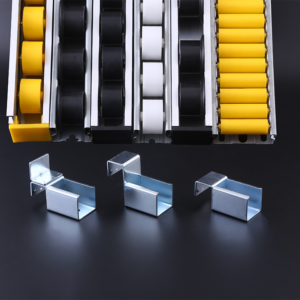
Using modular roller track components also simplifies maintenance when individual rollers become worn over time. At Junyi, our modular components allow worn rollers to be replaced cleanly without replacing the entire track assembly.
Monitoring decibel trends along active flow lines provides early warning of mechanical wear before major component failures occur. Continuous acoustic monitoring transforms noise management into a reliable indicator of overall system health.
Partnering with us at Junyi ensures access to reliable structural framing hardware engineered for demanding industrial environments. Maintaining quiet flow lanes improves worker comfort while extending equipment service lifespans across modern distribution facilities.
Systematic decibel control ultimately depends on thoughtful component selection, precise mechanical alignment, and proactive upkeep habits across operations on heavy-duty roller tracks.