You’re replacing worn roller tracks on your assembly benches. The supplier offers two options: plastic and steel. One costs less upfront. The other promises longer durability. Without understanding what each material actually delivers under your specific conditions, you’re making an expensive guess.
The wrong choice creates problems that persist for years. Plastic installed on demanding benches fails faster than expected. Operators struggle with binding tracks. You spend money on maintenance that delays the inevitable replacement. Steel specified for light-duty benches wastes money and adds unnecessary weight to mobile equipment. The correct choice depends on matching material characteristics to your actual workbench operating conditions.
What Plastic Roller Tracks Actually Deliver
Plastic roller tracks (typically acetal copolymer) perform well in specific applications within clear performance boundaries.
Load capacity depends on roller design, spacing, support conditions, and how load distributes across multiple wheels. Plastic roller tracks can handle light to moderate loads, but their actual capacity varies by manufacturer and installation. Verify capacity specifications with your supplier rather than assuming generic ranges.
Corrosion resistance is plastic’s significant advantage. Plastic does not rust and generally requires less maintenance than steel in humid or salt-exposure environments. However, plastic can still degrade chemically, swell under certain conditions, or wear under heavy use. It’s not maintenance-free, just lower-maintenance than uncoated steel.
Weight matters for mobile benches. Plastic is substantially lighter than steel, making workstations easier to reposition during facility reorganization. For benches that move frequently, weight reduction has operational value.
Temperature response is a genuine limitation. Heat is where plastic begins to lose some of its advantage. As temperature rises significantly, plastic can deform or wear faster than steel. High-heat environments—near furnaces, under direct sunlight, or in press areas—demand material verification before specifying plastic.
Noise and vibration are lower with plastic. Plastic absorbs shock better than steel, creating quieter operation. For assembly areas where worker comfort or concentration matters, this characteristic is valuable.
When Steel Becomes the Better Choice
Steel roller tracks tolerate demands that plastic cannot handle consistently.
Higher load capacity is steel’s primary advantage. Steel can support substantially higher loads than plastic, though actual capacity depends on track profile, roller diameter, bearing quality, and support spacing. Steel is generally the safer choice for higher loads and demanding continuous-duty applications where load verification is critical.
Durability under continuous use is superior. In high-frequency assembly operations where components move constantly, steel wears significantly slower than plastic. The material resists degradation better over extended service intervals.
Temperature stability matters in hot environments. Steel maintains consistent performance across temperature ranges that would affect plastic. For applications where operating temperature varies significantly, steel performance is more predictable.
Service and repair are more practical with steel. Heavily worn plastic tracks are often replaced rather than repaired. Steel tracks can sometimes be cleaned, adjusted, or refinished if binding develops, extending service life.
The trade-offs are initial cost and weight. Steel requires protective coating in corrosive environments. Stainless alternatives cost more. Steel is heavier, affecting workbench mobility.
Assessing Your Actual Workbench Conditions
Material selection should reflect your specific operating environment, not industry assumptions.
Document component weights. Weigh the heaviest items moved across the track. Measure typical load distribution—does one component sit on the track, or do multiple items load simultaneously? Concentrated heavy loads and distributed moderate loads create different demands.
Measure usage frequency. Count how often components move across the track hourly or daily. Light-duty, intermittent use places different demands than continuous material flow. Higher frequency accelerates wear, favoring materials with better fatigue resistance.
Record temperature conditions. Note the workbench’s ambient temperature throughout the workday. Does temperature fluctuate significantly? Is the workbench near heat sources? Stable, moderate temperatures favor plastic. Temperature extremes or exposure to heat favor steel.
Identify corrosive exposure. Is the workbench in a humid environment, near salt spray, or exposed to oils and solvents? Chemical exposure and moisture affect material durability differently. Plastic generally resists chemical splash better than bare steel.
Check applicable standards. If the workbench supports specific equipment, review the equipment manufacturer’s guidance on support structure and material requirements. This documentation reflects actual load conditions.
Making the Selection for Your Specific Application
When configuring a workbench with our tube and joint systems at Junyi, consider the load, usage frequency, temperature, and corrosive exposure to guide your roller track material selection. Plastic roller tracks work best for light-duty assembly benches (components under 50 pounds moving individually), low-frequency use (occasional material flow), humid or corrosive environments, or mobile benches where weight reduction matters. The lower initial cost, natural corrosion resistance, and lighter weight make plastic economical when load demands remain moderate.
Steel roller tracks are necessary for heavy-component assembly (75+ pounds), continuous high-frequency operation, environments with temperature extremes, or applications where extended service life justifies higher initial investment. Steel’s load capacity and temperature stability are essential when plastic would degrade prematurely or fail under demand.
Hybrid approaches work when different workbench sections have different demands. Specify plastic in light-load assembly areas and steel where heavy components concentrate. This strategy optimizes expense—paying for steel only where load or environment demands it.
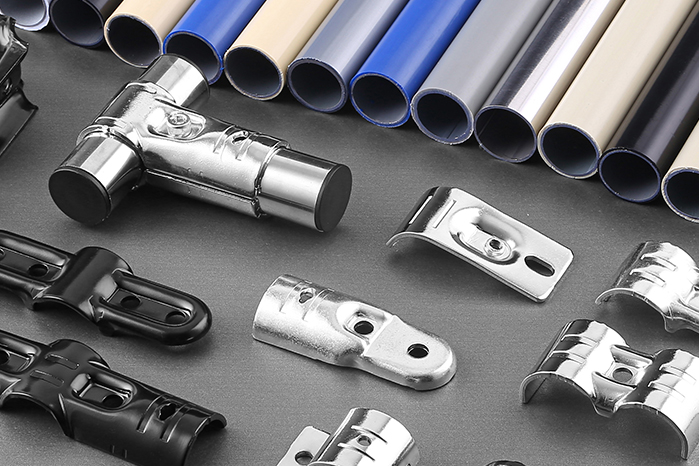
For assembly benches built around modular tube and joint structures, the selected roller track should match the frame, load profile, and working environment. We at Junyi provide compatible track and structural components for these configurations, supporting whichever material choice matches your workbench’s actual demands.