In the high-pressure world of modern manufacturing, the floor space of a factory is its most expensive asset. Efficiency is measured not just by the speed of the assembly line, but by the fluidity of the supply chain feeding it. To achieve a truly “Lean” operation, materials must move with minimal human intervention and maximum density. This is where the engineering of flow rail racking becomes transformative. By utilizing gravity-fed systems, factories can eliminate “motion waste” and drastically reduce the footprint required for inventory storage.
The Mechanics of Gravity-Fed Logistics
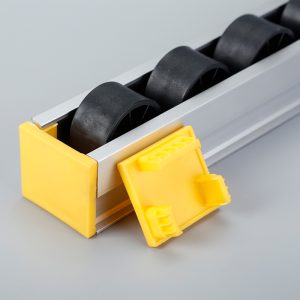
At its core, flow rail racking operates on the principle of dynamic storage. Unlike traditional static shelving where items are placed and retrieved from the same face, flow systems utilize a sloped entry and exit strategy. By installing a high-precision pallet roller track at a calculated incline—typically between 3% and 4%—the force of gravity is harnessed to move goods forward.
This creates a First-In, First-Out (FIFO) inventory logic that is essential for industries where batch control and shelf-life management are critical. When the front pallet or bin is removed from the “pick face,” the subsequent units slide forward automatically. This self-replenishing cycle ensures that operators never have to reach deep into a rack or travel to the back of a warehouse to find the next item in the sequence.
Strategic Efficiency Gains in 2B Environments
For industrial facility managers, the implementation of flow rail racking addresses three primary bottlenecks in the production cycle:
- Optimization of Floor Density
Traditional racking requires a forklift aisle between every single row. In a flow-based system, multiple lanes of inventory can be packed side-by-side and back-to-back. By utilizing a pallet roller track for deep-lane storage, a facility can reclaim up to 50% of the space previously dedicated to aisles. This high-density configuration allows companies to increase their storage capacity without moving to a larger, more expensive building.
- Reduction in Material Handling Labor
In a standard warehouse, a significant portion of a forklift operator’s time is spent “searching and traveling.” With flow rails, the travel path is standardized. Loaders stay at the “charge” end, and pickers stay at the “discharge” end. This separation of duties eliminates cross-traffic interference and reduces the “travel waste” (Muda) that plagues inefficient logistics hubs.
- Enhanced Workplace Safety
By centralizing loading and unloading zones, flow rail racking reduces the number of forklift movements in high-traffic pedestrian areas. Furthermore, high-quality roller tracks are equipped with speed controllers and end-stops that manage the momentum of heavy pallets, ensuring that goods arrive at the pick face at a controlled, safe speed.
The Role of Material Science in Flow Performance
The reliability of a flow system is entirely dependent on the friction coefficient of the pallet roller track. If the rollers are too soft, they will deform under long-term static loads, creating “flat spots” that stop the flow. If the bearings are not sealed, industrial dust will seize the mechanism. From a popular science perspective, the system is an exercise in managing potential energy; the hardware must ensure that the transition from static to kinetic energy is smooth, consistent, and repeatable over thousands of cycles.
JunYi: Your Partner in High-Performance Flow Solutions
At JunYi (Shenzhen Junyi Storage Equipment Co., Ltd.), we specialize in the manufacturing of professional-grade components that form the infrastructure of efficient factories. We understand that for our B2B partners—integrators, racking manufacturers, and logistics consultants—the durability of a roller track is the difference between a high-performing warehouse and a costly operational failure.
As a dedicated OEM and ODM manufacturer, we prioritize the technical nuances that ensure long-term performance. Our pallet roller track series is engineered to support heavy industrial loads while maintaining the low-noise, smooth-rolling characteristics required for high-throughput environments.
Technical Specifications of JunYi Roller Track Systems
We manufacture our flow components to meet the exact tolerances required for seamless integration into both standard and modular racking systems. Below are the core specifications for our industrial-grade series:
Why Global Integrators Trust JunYi
In the 2B sector, consistency is everything. Our production lines utilize advanced automated stamping and assembly to ensure that every section of flow rail racking we produce has perfectly aligned rollers. This precision is vital; even a 1mm deviation in roller height can cause a pallet to “crab” or stall in a deep-lane system.
Furthermore, we offer specialized customization through our ODM services. Whether your project requires a specific roller pitch for small plastic totes or heavy-duty steel rollers for timber pallets, our engineering team at JunYi can develop a solution tailored to your proprietary rack designs. We also provide anti-static (ESD) roller options for electronics manufacturing, ensuring that your flow systems don’t become a source of static discharge.
By choosing JunYi components, you are investing in a “no-maintenance” philosophy. Our galvanized steel frames and high-density polymer rollers are designed to withstand the humidity and temperature fluctuations of global shipping and manufacturing hubs. We don’t just supply tracks; we supply the momentum your factory needs to stay competitive.