In its first week of operation, your lean piping system was faultless. The third week in, you’re now tightening bolts once a week. Wobble has occurred in connections that were solid at first construction. The design of the joint isn’t always the issue; rather, it’s typically the assembly process or the working environment, or sometimes both.
Understanding why lean pipe joints loosen prevents the frustration of chasing the same problem repeatedly.
Why Lean Joints Loosen: The Three Primary Mechanisms
Bolted connections loosen through distinct mechanisms, each requiring different diagnosis and correction.
Microslip loosening occurs when clamping force is inadequate. The joint surfaces move microscopically under load, creating friction that gradually loosens the fastener. From outside, the joint appears fine until it fails suddenly. Microslip happens when fasteners are under-tightened or when load increases after assembly.
Vibration loosening happens when cyclic motion—machinery vibration, foot traffic, equipment operation—causes repetitive stress on fasteners. Each vibration cycle loosens the bolt slightly. The joint tightens normally during assembly, then vibration gradually reduces preload until the connection fails. This is why the same joint design works fine in a static application but loosens continuously in a vibrating environment.
Thermal loosening occurs when temperature changes cause differential expansion. The steel core of a coated pipe, its plastic layer and the steel joint all expand at different rates as temperature rises. When the system cools, the materials shrink unequally, reducing clamping force. Repeated thermal cycling (heating and cooling) repeatedly loosens fasteners over time.
Most loosening problems involve at least two mechanisms. A joint that’s slightly under-tightened (mechanism 1) will loosen faster in a vibrating environment (mechanism 2). Understanding which mechanisms are active in your application guides the correct fix.
Diagnosing Installation Error as the Cause
Installation errors—incorrect fastener type, wrong tightening sequence, or inadequate preload—cause immediate and recurring loosening.
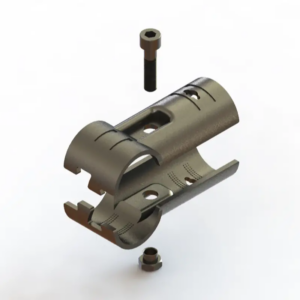
Inspect the fastener type. Check that bolts match your joint design specifications. If your design specifies a particular fastener size or strength class, verify that the installed fasteners match the engineering requirements. Using fasteners with inadequate strength can reduce joint performance under load. For our Junyi lean joint, refer to the applicable product specifications and installation requirements when selecting and verifying fasteners.
Examine fastening sequence. If previous technicians tightened bolts randomly rather than following the alternating cross-pattern required for even preload distribution, some bolts are over-tightened while others remain loose. This uneven preload causes failure. Review your assembly documentation and confirm that technicians follow the specified sequence.
Check for foreign material in threads. Dirt, corrosion, or thread-locking compound residue in bolt holes prevents fasteners from achieving full seating. The bolt appears tightened (because the handle reaches resistance) but actual preload is low. Clean threaded holes completely before assembly. For reused holes where corrosion exists, run a thread-cleaning tap through the hole before inserting a new fastener.
If installation error is the cause, re-tighten all fasteners following the proper sequence, using calibrated torque wrench and correct fastener specification. Document the re-tightening. If loosening recurs within days, installation wasn’t the only cause—look at vibration or thermal factors.
Identifying Inadequate Fastener Preload
Even correct fastener installation can involve inadequate preload if the tightening procedure wasn’t rigorous.
Use a torque wrench for diagnosis. Once a joint is supposedly tightened, attempt to tighten each bolt slightly more using a torque wrench set to 2–3 foot-pounds. If the bolt rotates easily, preload is below specification. If the bolt won’t rotate at all, preload is appropriate.
This test reveals whether initial tightening actually achieved proper preload or whether fasteners were left loose. Loose fasteners must be re-tightened using a properly calibrated torque wrench and the correct fastening sequence.
Calibrate your torque wrench. An uncalibrated wrench—or one used beyond its recommended interval without checking—doesn’t apply the intended preload. A wrench that reads low applies less preload than intended, leaving joints insufficiently tight. Many facilities discover torque wrench calibration is missing or infrequent. Establish a maintenance schedule for wrench calibration (typically annually) and document it.
Verify bolt condition. Bolts that have been removed and reinstalled multiple times experience thread deformation. Deformed threads don’t seat properly in the hole, creating gaps under load. If bolts have been reused many times, replace them with new fasteners. New bolts seated in clean holes achieve predictable preload; reused bolts often don’t.
Recognizing Vibration-Induced Loosening
If joints loosen continuously despite proper initial tightening, vibration is likely the culprit.
Identify vibration sources. Nearby machinery, rhythmic foot traffic, or impact from material handling can excite lean joint fasteners. Lean piping systems positioned near punch presses, drop hammers, or production equipment experience higher vibration than systems in quiet areas.
Test with thread-locking compound. Apply removable thread-locking compound (typically blue, medium-strength) to fasteners before tightening. This chemical adhesive prevents microslip loosening. If joints remain tight with thread-locking compound but loosen without it, vibration was the problem.
Once you confirm vibration is causing loosening, use thread-locking compound permanently on all fasteners in that system. At Junyi, our lean joint systems can be upgraded with thread-locking compound as standard practice in vibration-prone environments.
Alternatively, upgrade to nylon-insert lock nuts (Nyloc nuts) that resist vibration loosening through friction, or apply flat washers and split washers under bolt heads to distribute load and increase friction. These simple upgrades often resolve vibration-related loosening without major redesign.
Addressing Environmental Factors That Accelerate Loosening
Temperature cycling and humidity create stress that loosens bolts over time, especially in aluminum-steel combinations.
Monitor temperature ranges. If your facility experiences significant temperature swings (outdoor installations, facilities without climate control), thermal expansion and contraction cycle repeatedly. This cycling continuously loosens fasteners. Temperature-related loosening is slow and predictable—joints gradually loosen over days or weeks, then return to tight as temperature stabilizes, then loosen again with the next temperature cycle.
Use thermal-expansion fastening methods. For applications with extreme temperature cycling, consider alternative fastening approaches: belleville washers that maintain preload across temperature ranges, or fasteners with improved lock features. High-quality lock washers can reduce thermal loosening.
Protect bolts from corrosion. Corrosion products build up in threads, creating false tightness (bolt appears to resist but preload is actually low). Stainless steel or coated fasteners resist corrosion better than plain steel in corrosive environments. Replace corroded bolts with corrosion-resistant alternatives.
Preventing Recurrence Through Process Documentation
Once you solve a loosening problem, prevent it from recurring through documented procedure.
Document the root cause you identified. If loosening was caused by inadequate initial preload, train all technicians on proper torque specification and calibration. If vibration was the cause, document that this system requires thread-locking compound. If thermal cycling was involved, note the temperature range and specify fasteners rated for that range.
Create a maintenance schedule. For systems prone to loosening, inspect and re-tighten fasteners at defined intervals—every 2 weeks, monthly, or quarterly depending on severity. Scheduled inspection and preventive re-tightening is more cost-effective than responding to failures.
Our lean pipe joint systems at Junyi include maintenance documentation specifying inspection frequency and re-tightening procedures for different installation environments. Use these guides as your baseline, adjusting inspection intervals based on your actual experience.
Track loosening patterns. If certain joints loosen repeatedly while others remain tight, investigate whether that location experiences higher vibration, temperature swings, or installation difficulty. Targeted improvements to problem areas are more efficient than system-wide overhauls.
From Recurring Loosening to Stable Connections
Loose lean joints aren’t inevitable. Most loosening results from installation procedure, inadequate preload, or known environmental stressors. Diagnosing the root cause—distinguishing installation error from vibration from thermal stress—guides the appropriate fix.
Proper initial assembly, environmental protection when needed, and periodic inspection transform loose joints into stable connections that remain tight throughout the system’s service life.