Heavy-duty lean pipe systems carry loads that demand fastening precision far beyond casual assembly. Automated assembly systems, material handling platforms, or multi-ton equipment mounted on lean piping experience forces that require careful specification and installation.
A loose bolt in a light workstation creates downtime. A loose bolt in a heavy-duty system can cause catastrophic failure—equipment tipping, structural collapse, or material spilling. The difference between systems that remain stable under load and those that fail is fastening discipline applied systematically.
Why Heavy-Duty Applications Demand Fastening Rigor
Heavy-duty lean pipe systems operate under stressors that light-duty systems avoid: sustained loads, dynamic stress from equipment operation, vibration, thermal cycling, and occasional shock loads from dropped materials or sudden stops.
Each stressor loosens bolts through different mechanisms. Sustained load creates microslip if fasteners aren’t adequately preloaded. Dynamic stress and vibration progressively loosen fasteners over time. Thermal cycling reduces preload as materials expand and contract. Shock loads can exceed fastener capacity if fastening isn’t designed for peak forces, not just average loads.
The consequence of fastening failure in heavy-duty applications is severe. Light-duty workstations fail gradually and inconvenience operators. Heavy-duty systems fail catastrophically. Equipment tips. Materials spill. In worst cases, people are injured.
Understanding Load Distribution Through Bolted Connections
Heavy loads don’t distribute evenly across fasteners by default. How fasteners are arranged, tightened, and designed determines whether load distributes evenly or concentrates on a few fasteners while others carry minimal load.
The relationship between bolt preload and load capacity depends on joint geometry, fastener material, load type, and loading conditions. For heavy-duty applications, fastener specification should be based on engineering analysis or published load-capacity data appropriate to your application.
Fastener Selection: Grade, Size, and Quantity
Fastener specification drives whether your system tolerates heavy loads or fails under them.
Bolt grade and material should be selected according to the joint load, fastener diameter, material combination, and required safety margin. Higher-strength fasteners may be appropriate for heavily loaded applications, but strength grade alone does not determine the stability of the connection. Load direction, joint geometry, shear versus tensile loading, and fatigue considerations all influence the correct specification.
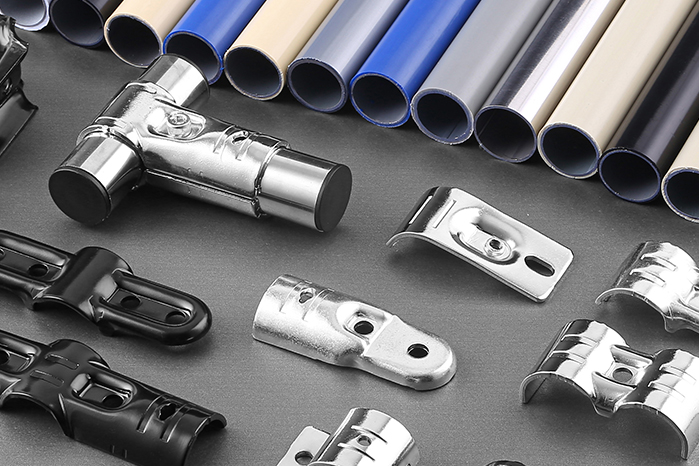
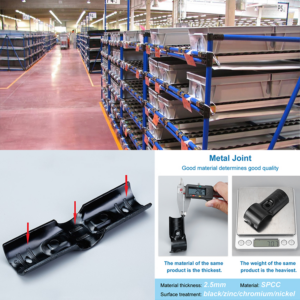
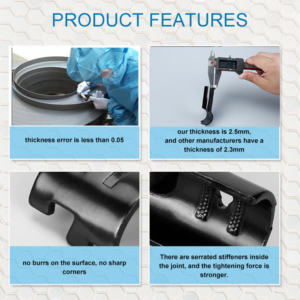
We at Junyi provide coated pipes and metal joints for modular lean pipe systems, enabling structures to be assembled and adapted to different workstation, material-handling, and equipment-support requirements. The joint configuration and fastening method should be selected according to the structure, load direction, and operating conditions. For heavy-duty applications, proper matching of the metal joint, coated pipe, and fasteners is essential to maintain structural stability under load.
Fastening Sequences That Ensure Even Load Distribution
The order in which you tighten fasteners determines whether preload distributes evenly. Random tightening creates uneven preload, guaranteeing concentration of load on a few fasteners.
For a four-bolt joint, use the cross pattern: tighten bolt 1 (top), then bolt 3 (bottom), then bolt 2 (left), then bolt 4 (right). This alternating pattern prevents rocking and ensures clamping force builds evenly around the joint.
Two-pass tightening is essential for heavy-duty systems. First pass tightens all fasteners to approximately 50% of target preload in the proper sequence. Second pass tightens to full preload using the same sequence. Two-pass tightening ensures that clamping force builds progressively and evenly, preventing concentration of load on any single fastener.
Techniques That Improve Joint Performance
Standard bolted joints work adequately for many applications. Heavy-duty systems may benefit from additional techniques that improve stability under specific conditions.
Belleville washers (spring washers) can help maintain preload in applications exposed to vibration or thermal cycling when properly selected and installed. They work by flexing as materials expand or contract, maintaining clamping force. However, their effectiveness depends on correct specification for your load and environment. Specify them according to your load conditions, not as a universal upgrade.
Thread-locking compounds prevent vibration-induced loosening by resisting microslip. Medium-strength removable compounds (typically blue) prevent gradual loosening while remaining removable for future service. For systems in vibrating environments, thread-locking compound can reduce the need for frequent re-tightening.
Nylon-insert lock nuts (Nyloc nuts) resist vibration loosening through friction. The nylon insert creates resistance to rotational loosening. Their effectiveness depends on installation quality and environmental conditions (extreme temperatures can affect the nylon).
These techniques address specific conditions rather than improving all heavy-duty systems universally. Evaluate whether your application—load type, environment, expected service life—justifies each technique.
Pre-Service Verification Before Heavy Loading
Before placing heavy loads on a newly assembled system, verify that fastening is adequate and load distribution is even.
Visual inspection looks for gaps between joint surfaces. If daylight shows between the connector and pipe at any fastener location, clamping force may be inadequate. Gaps suggest the need for re-tightening. Tighten all fasteners following the proper sequence and verify gaps have closed.
Fastening torque verification should follow the manufacturer’s specified values. Verify fastening torque with a calibrated torque wrench according to the documented specification. For critical assemblies where preload verification is safety-critical, use an appropriate preload verification method rather than relying on additional bolt rotation as a direct indication of clamp force. Torque alone—without accounting for thread friction, lubrication, and bolt condition—does not directly measure preload.
Joint movement monitoring (for critical systems) tracks whether the joint deflects excessively under load. Place measurement indicators on the lean pipe joint and observe deflection when load is applied. Excessive deflection indicates inadequate preload or fastening. The acceptable deflection limit depends on your design specifications.
These verification procedures take time but prevent failures that would cost far more in downtime, repair, and potential injury.
From Assembly to Reliable Heavy-Duty Operation
At Junyi, we understand that a reliable heavy-duty lean pipe system depends on more than strong components. We recommend selecting fasteners according to the joint configuration, load conditions, and applicable engineering requirements, then tightening and verifying each connection systematically.
By properly matching our coated pipes and metal joints with the appropriate fastening method, we help customers build stable modular structures for material handling, workstations, and equipment-support applications.
When designing or upgrading a heavy-duty lean pipe system, start with the actual load and operating conditions rather than choosing fasteners by size alone. At Junyi, we use the modularity of our coated pipes and metal joints to help create structures that can be configured for specific applications and adjusted as operational requirements change. Proper fastening is the foundation; the right combination of components, configuration, and installation is what turns that foundation into a dependable system.