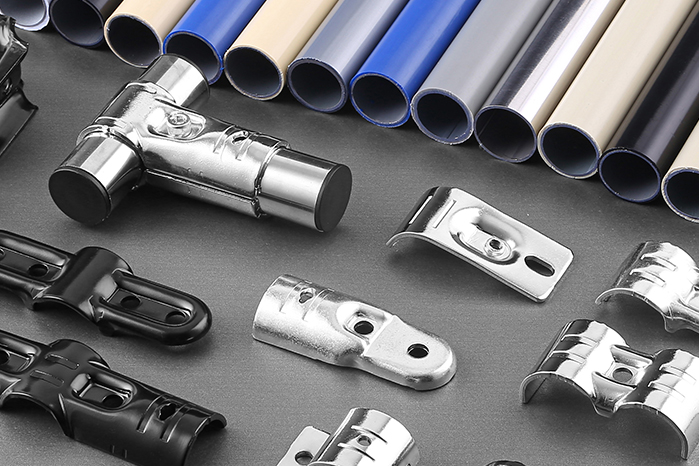
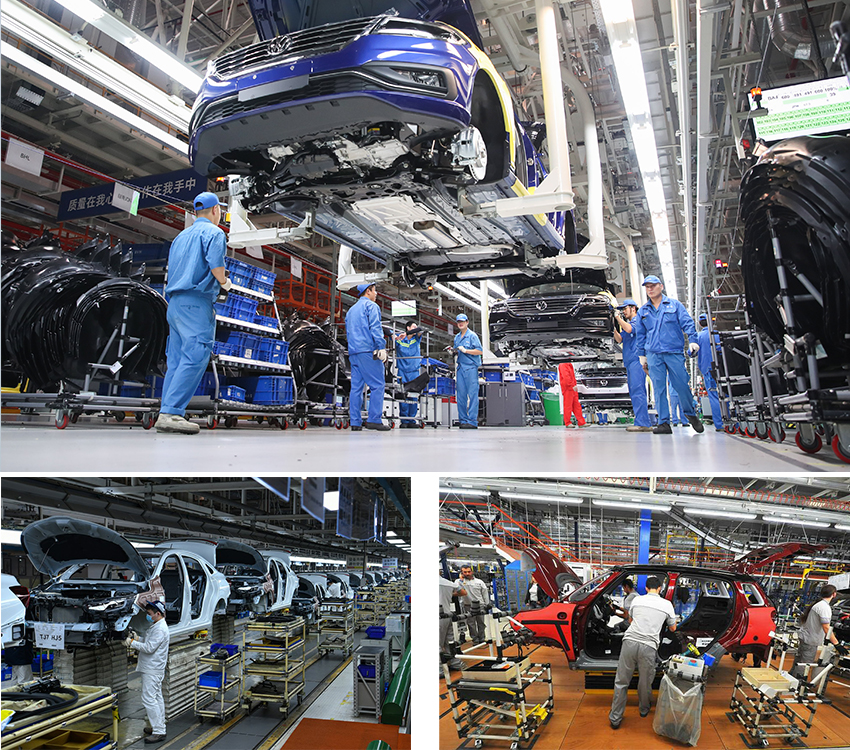
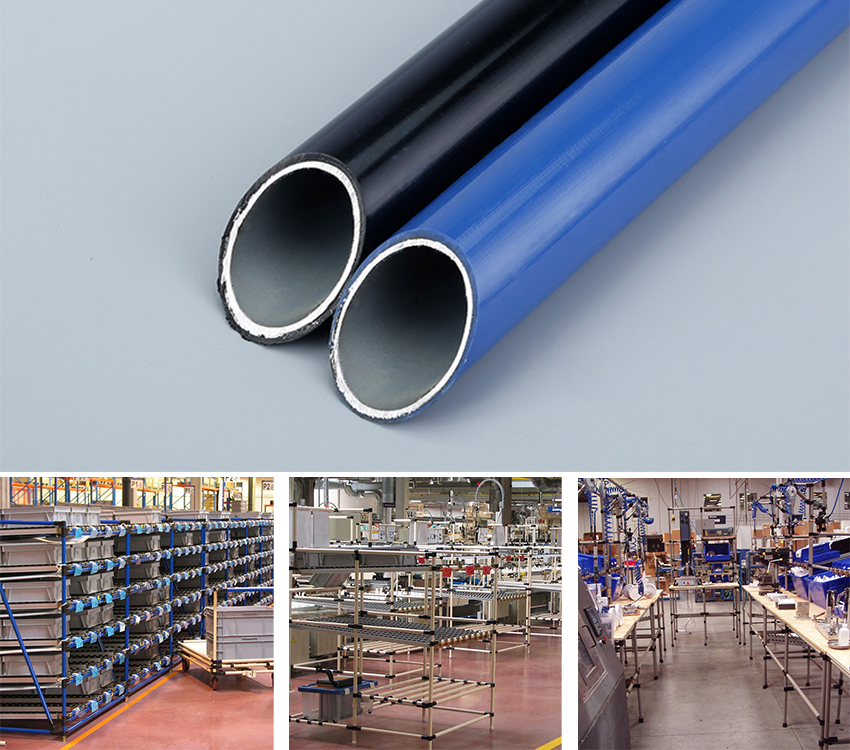
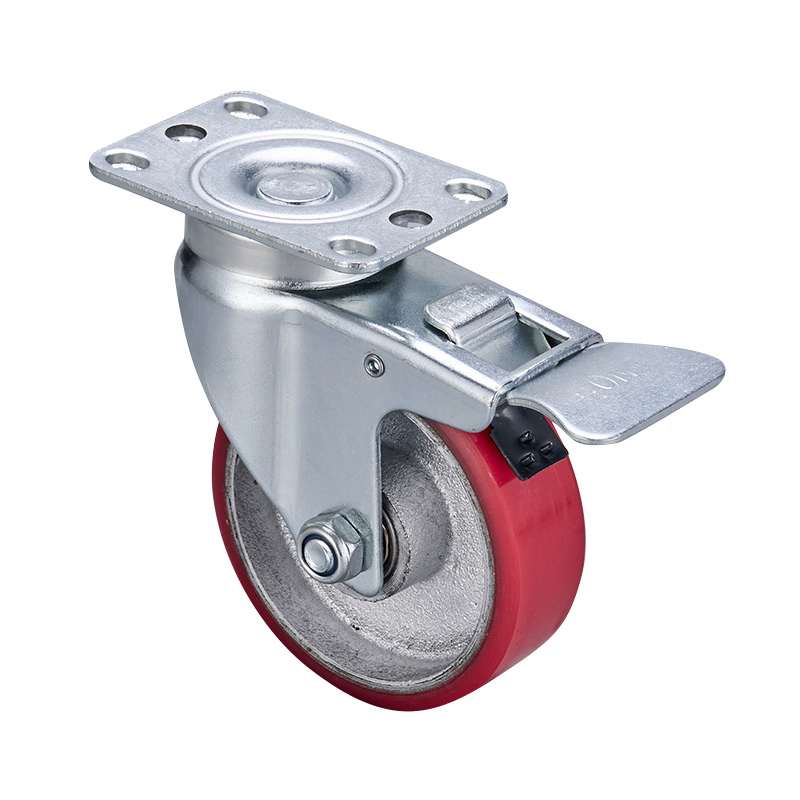
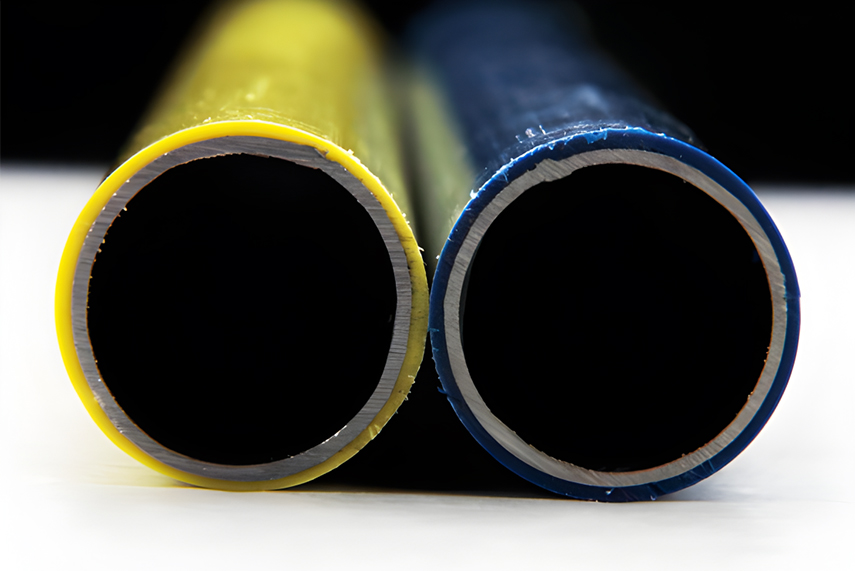
The tube is the backbone of any custom tube and joint system. But the tube alone is just steel. The coating determines how long that steel performs, how reliably it connects to joints, and how well it withstands the conditions of your facility.
For manufacturers like us at Junyi, PE coated pipe is an important component of reliable custom tube and joint systems. PE coated pipe — steel pipe with a polyethylene outer layer — delivers a set of benefits that uncoated or alternatively coated pipes simply cannot match. Here is what that coating actually buys you in a custom tube and joint system.
Corrosion Protection That Starts From the Inside Out
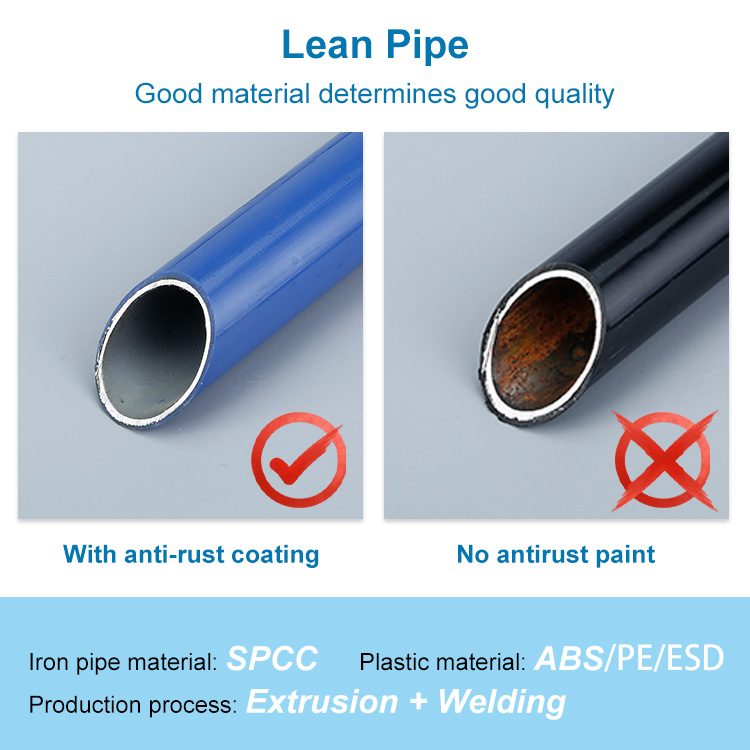
Rust is the slow killer of steel structures. Most coatings address only the exterior surface, leaving the inner wall vulnerable. Moisture from humidity, condensation, or washdown processes finds its way inside and corrosion begins from within — invisible until the pipe fails.
In systems that use an internal anti-rust treatment in addition to the external PE layer, the pipe receives protection on both surfaces. The interior treatment forms a tight, durable bond with the pipe wall, preventing rust from originating inside. The polyethylene outer layer then provides the external barrier.
The result is a pipe that resists corrosion in both directions, extending service life in humid industrial environments, chemical exposure areas, or facilities with regular washdown cycles. For tube and joint systems that must remain in service for years, this dual protection is a significant advantage.
Uniform Coating Thickness Eliminates Fit Problems
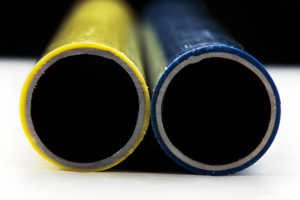
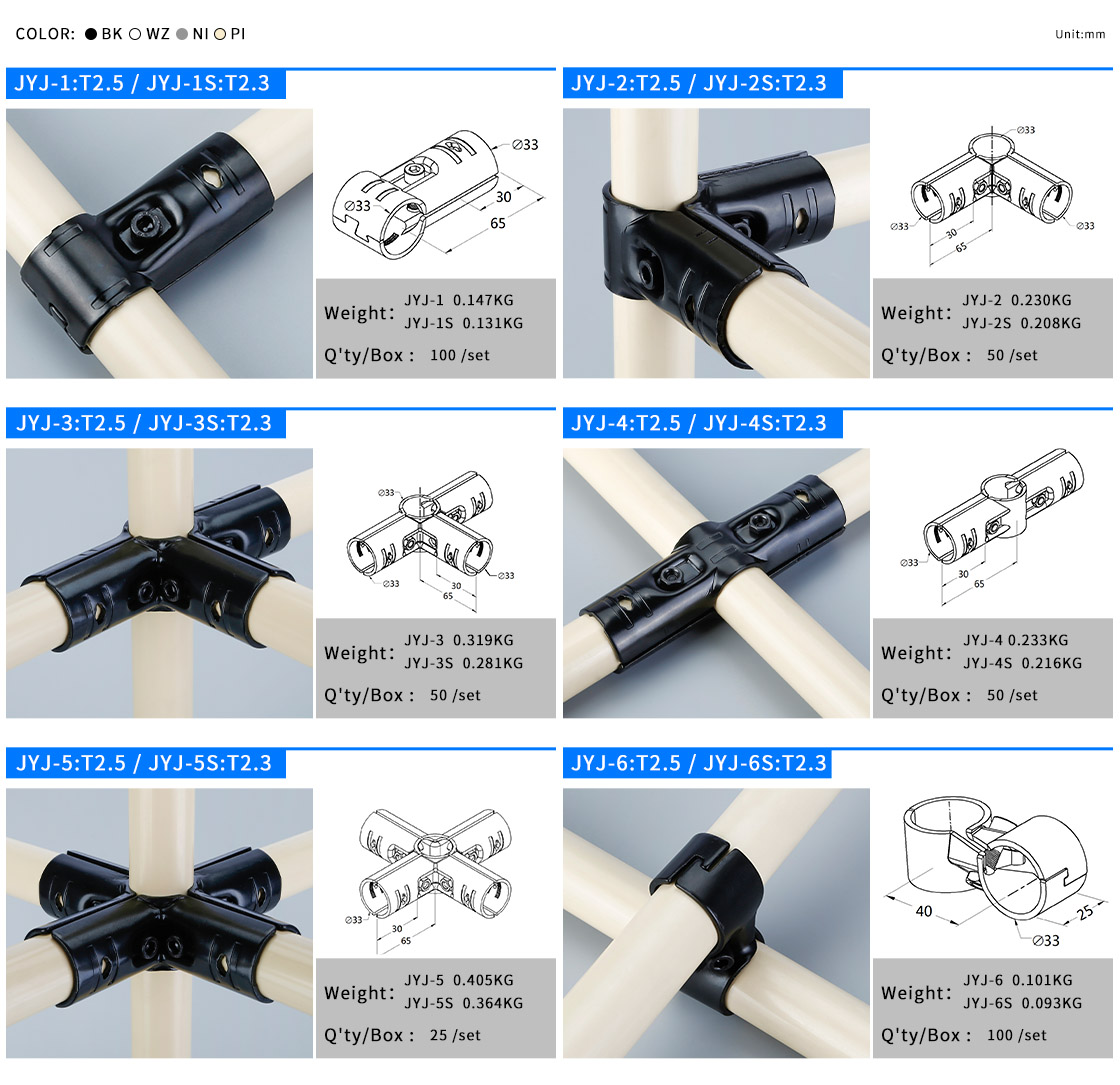
Custom tube and joint systems rely on precise mechanical connections. Metal joints clamp onto the pipe exterior, and the fit must be exact. A coating that varies in thickness creates loose connections or, worse, connections that cannot be made at all.
PE coating is applied with precise, even thickness across the entire pipe surface. This uniformity ensures a precise fit with metal joints, meeting the tight assembly tolerances required by tube and joint systems. Variation in coating thickness — common with less controlled application methods — introduces slop into every connection point.
That slop accumulates across multiple joints, resulting in structures that wobble, shift, or fail to hold alignment. Uniform PE coating eliminates that variable. Every connection is consistent. Every structure is stable.
Mechanical Durability Beyond Surface Protection
Corrosion resistance is the headline benefit. But the mechanical properties of PE coating are equally important in industrial environments where pipes face abrasion, impact, and chemical exposure.
Polyethylene provides excellent abrasion and impact resistance, acting as a complete barrier to the underlying pipe surface. This matters in tube and joint systems that are moved, reconfigured, or subjected to repeated contact with carts, tools, and materials. The coating resists oil, wear, and impact, helping maintain its integrity under demanding operating conditions.
In chemical environments, PE stands up to solvents and industrial cleaners that degrade other coating types. The cold-rolled steel core provides the structural strength; the PE coating provides the durability that keeps that strength intact over time.
UV Resistance That Extends Storage and Service Life
Many industrial components spend time outdoors before they reach the production floor. Pipes sit in storage yards, on loading docks, or in transit. UV exposure degrades many coating systems — epoxy coatings in particular lose integrity when exposed to sunlight.
PE coated pipe offers substantially better resistance against UV than epoxy coated alternatives. This means pipes can be stored outdoors without degradation, a practical advantage for facilities with limited indoor storage.
More importantly, UV resistance translates to longer service life in applications where tube and joint systems are used in outdoor or semi-outdoor environments — loading areas, shipping yards, or facilities with translucent roofing that admits UV. The coating does not become brittle, chalky, or compromised over time. It is designed to perform to specification from installation through years of service.
Self-Healing Properties That Protect Against Field Damage
No coating is immune to damage. Pipes get scratched during assembly, nicked during reconfiguration, or gouged by contact with sharp objects. In most coating systems, that damage exposes bare steel and corrosion begins.
Some PE coating systems can provide a degree of self-healing after minor surface damage, depending on the adhesive and coating formulation. When the coating is damaged — for example, a hole drilled through the PE and adhesive layer — the adhesive layer may slowly flow to cover the exposed area.
In properly engineered systems, this mechanism can seal the damage and restore corrosion protection. In tube and joint systems that undergo frequent reconfiguration — and therefore frequent handling that can damage coatings — this self-healing characteristic extends the effective service life of every pipe. Small scratches do not become rust spots. Minor damage does not necessarily require pipe replacement.
To ensure the integrity of our tube and joint systems, Junyi applies these principles to all PE coated pipes. To guarantee that the tube and joint systems we provide operate as expected even after years of industrial usage, we control requirements such as the inner wall anti-rust treatment, uniform coating thickness, and polyethylene layer quality.
PE coated pipe is not simply a tube with a plastic cover. It is a component engineered to resist corrosion, maintain a precise fit, withstand mechanical wear and impact, and survive UV exposure. Those are the benefits that determine how well a tube and joint system performs over its service life.