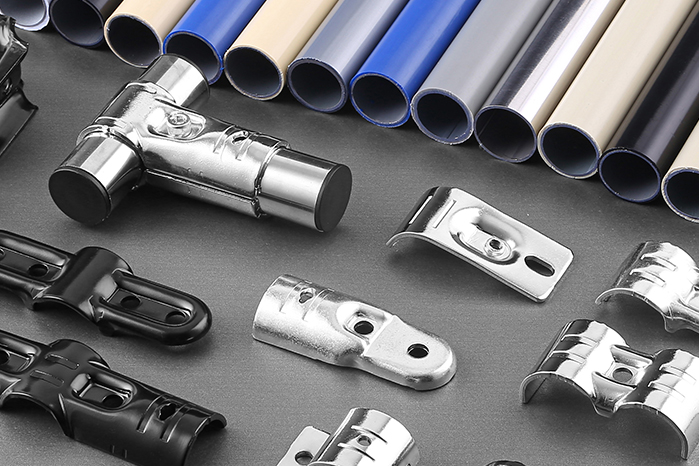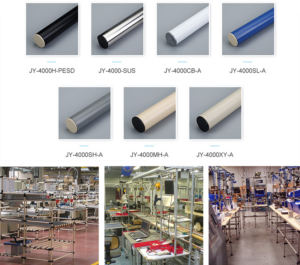
Standardizing assembly workstations across a manufacturing facility directly influences operator efficiency, error rates, and cycle time consistency. Fixed steel or wood desks rarely accommodate the physical variations required for distinct assembly steps in modern lean production facilities.
At Junyi, we assist production engineers in designing adaptable workstation frameworks that match specific operator reach zones, tool balances, and part presentation requirements accurately.
Modular structural systems enable plant supervisors to duplicate successful workstation layouts across multiple assembly lines while maintaining strict operational standards.
The Role of Modular Framing in Assembly Standardization
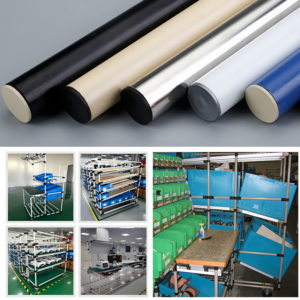
Variability in operator posture, bin placement, and tool accessibility introduces subtle micro-wastes into high-speed assembly workflows every single day. When individual workers customize their benches using temporary fixtures, standard operating procedures break down and quality control becomes difficult to monitor.
Utilizing a standardized lean pipe framework allows industrial engineers to establish uniform physical boundaries, tool positions, and material flow channels for every shift. Uniformity ensures that operators moving between workstations encounter identical layout geometry, reducing cognitive load, physical fatigue, and orientation time.
Traditional welded workbenches offer structural rigidity but prevent subsequent dimensional adjustments when product specifications evolve or new model variants are introduced. In contrast, assembling structures with a versatile lean tube system allows plant technicians to adjust rack heights, shelf angles, and bin rails using basic hand tools.
This structural flexibility makes it easier to test alternative layouts during continuous improvement events before locking in final station designs. Standardizing on modular components keeps capital expenditure predictable and controllable across facility upgrades.
Customizing Ergonomic Layouts for Specific Assembly Steps
Ergonomic alignment directly impacts operator fatigue, assembly accuracy, and overall throughput during demanding manufacturing shifts. Tailoring workstation dimensions to fit specific human reach envelopes eliminates unnecessary stretching, twisting, and bending movements that cause repetitive strain injuries.
Building custom structures with a flexible lean pipe allows engineering teams to position heavy sub-assemblies and hardware bins within optimal Golden Zone reach areas. Proper bin angling ensures parts slide forward automatically as inventory depletes during continuous assembly cycles.
Every manual assembly task requires distinct physical support, ranging from overhead LED lighting mounts to integrated balancing arms for heavy pneumatic tools. Implementing a modular lean tube setup enables facilities to attach articulated monitor arms, document holders, and component presentation trays directly onto the structural frame.
Positioning essential assembly materials close to the primary work surface maintains smooth manual rhythms across repetitive assembly cycles. Customized ergonomic designs safeguard worker well-being while preserving target tact times across high-volume production schedules.
Supporting Visual Management and 5S Methodologies
Sustaining 5S workplace organization standards requires dedicated physical locations for every hand tool, fixture, and component storage bin. Standardized benches build visual control directly into the workstation structure itself, making missing items or excess inventory immediately obvious to floor supervisors during routine walks.
Integrating a structured lean pipe architecture provides convenient mounting surfaces for shadow boards, color-coded bin rails, and clear instruction display panels. Visual clarity reduces time spent searching for tools during complex product changeovers.
Orderly component presentation prevents costly assembly errors by ensuring operators select parts in the correct sequential order every time. Custom presentation slopes position small parts directly at eye level, clarifying bin contents without forcing workers to lean over the bench surface.
At Junyi, we engineer modular joint systems that secure auxiliary accessories tightly, preventing frame wobble during continuous daily use. Maintaining clean structural sightlines helps quality auditors and team leads verify station compliance at a single glance.
Operational Flexibility and Rapid Reconfiguration
Manufacturing lines frequently adapt to engineering change orders, mix-model production demands, and shifting seasonal volumes across competitive industrial sectors. Fixed furniture creates friction during line rebalancing because modifying permanent benches requires cutting, welding, or replacing entire structural units.
Utilizing a reconfigurable lean tube structure enables maintenance crews to modify shelf pitches, add extension bays, or adjust bench heights during scheduled downtime windows. Rapid reconfiguration capabilities keep line transformation costs low and operational readiness high.
Modular structural tubes can be disassembled, sorted, and built into completely different configurations when a production program reaches end-of-life status. Reusing existing structural profiles minimizes raw material waste and aligns with corporate sustainability targets.
Facilities reduce storage requirements for obsolete shop floor furniture by keeping a stock of modular structural profiles on hand for future engineering projects. Structural flexibility ensures that physical workstation assets evolve alongside changing product architectures without recurring capital costs.
Implementing Scalable Workstation Standards Across Lines
Scaling standardized workstation configurations across multi-facility enterprises requires clear document control and modular design templates. Once engineers validate a workbench layout on a pilot assembly line, detailed bill-of-materials drawings allow maintenance teams to replicate identical stations reliably across secondary plants.
Choosing Junyi as a structural hardware partner ensures consistent dimensional tolerances and reliable joint clamping strength across every installation. Uniform quality control across supplier batches simplifies enterprise-wide rollout schedules and long-term asset management.
Long-term workstation standardization relies on active feedback from production operators, continuous engineering reviews, and disciplined layout maintenance routines. Reviewing ergonomic data and workflow bottlenecks helps facility planners refine baseline templates over time without abandoning the underlying structural philosophy.
Modern assembly plants thrive when physical infrastructure provides a stable, repeatable foundation for human precision and daily fulfillment targets. Establishing thoughtful workstation standards transforms manual assembly operations into predictable, high-performing manufacturing assets.