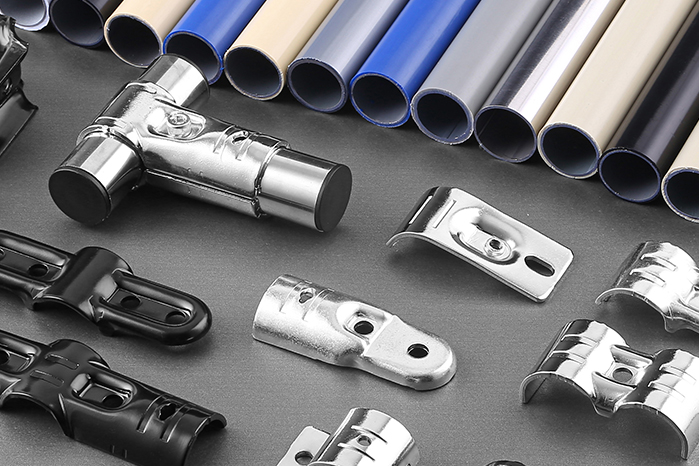
In the modern industrial sector, the ability to pivot production lines in response to shifting market demands is a primary competitive advantage. As factories move away from permanent, inflexible infrastructure, the “modular revolution” has taken center stage. At the heart of this transformation is the lean joint—a small but technically sophisticated component that serves as the skeletal connector for the entire lean manufacturing ecosystem. For 2B manufacturers and plant engineers, these joints are not just fasteners; they are the fundamental building blocks of operational agility.
The transition to a modular system allows a facility to move from a “static” state to a “dynamic” one. While the pipe provides the structure, it is the lean pipe joint that determines the strength, flexibility, and longevity of the workstations, carts, and flow racks that populate the factory floor.
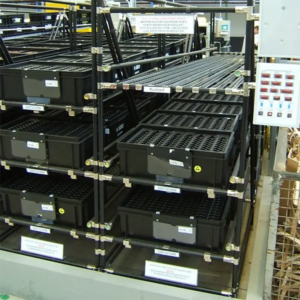
The Engineering Necessity of Modular Connections
Traditional industrial fabrication often relies on welding. While welding offers high strength, it is a “permanent” solution in an era that demands “temporary” perfection. Once a steel rack is welded, its dimensions are fixed. To change its height or width requires heavy machinery, specialized labor, and significant downtime.
A lean joint solves this by utilizing mechanical compression. By using high-strength metal connectors that wrap around the pipe and are secured with a single bolt and nut, manufacturers can create structural bonds that rival the stability of welds but can be disassembled in minutes. This is essential for:
- Rapid Prototyping: Engineers can build a “pilot” workstation, test it for ergonomic efficiency, and adjust the height or tilt instantly based on operator feedback.
- Space Optimization: As product lines evolve, the lean joint allows racks to be narrowed or expanded, ensuring that floor space is utilized to its maximized100% capacity.
- Maintenance Simplification: If a single section of a structure is damaged by an impact, only the affected pipe and joint need replacement, rather than the entire unit.
Technical Performance and Structural Integrity
For a lean pipe joint to be effective in a high-intensity industrial environment, it must meet rigorous metallurgical standards. These components are subject to constant shear forces and vibrations from nearby machinery. A high-quality joint must maintain its “grip” without slipping, even when under the maximum load capacity of the modular system.
Precision in manufacturing is what separates industrial-grade joints from consumer-grade imitations. The inner surface of the joint must be engineered to provide maximum surface contact with the pipe. This friction-based connection is what allows modular racks to support hundreds of kilograms of inventory without compromising safety or stability. Furthermore, the finishing of the joint—usually a chrome, black electrophoresis, or zinc coating—ensures that the system remains resistant to the oils, coolants, and humidity common in 2B manufacturing environments.
Strategic Infrastructure: The JunYi Advantage
At JunYi, we recognize that for our global partners, a joint is never “just a joint.” It is the critical point of failure or the key to success for an entire production cell. As a dedicated manufacturer focused on the 2B sector, we have refined our production processes to ensure that our lean joint solutions meet the uncompromising standards of automotive, electronics, and pharmaceutical industries.
Our role as a manufacturing partner is to provide the reliability that allows your engineers to be creative. We focus on the “small details”—the thickness of the steel, the precision of the bolt-hole alignment, and the durability of the surface treatment—so that our clients can focus on the “big picture” of factory-wide efficiency. When you integrate our components, you are investing in a system designed for a long-cycle industrial lifespan.
Precision Engineering: Spotlighting the JYJ-1
A cornerstone of our modular catalog is the JYJ-1 lean pipe joint. The JYJ-1 is the most versatile and widely used connector in our system, designed to create a perfect 90° T-junction or cross-connection between two pipes.
Constructed from high-grade cold-rolled steel, the JYJ-1 features a specialized inner-wall texture that enhances the friction-hold on the lean pipe joint, preventing rotation or sliding even under dynamic loads. Because we primarily serve OEM and ODM clients, we have optimized the JYJ-1 for rapid assembly. Its two-piece “clamshell” design allows it to be placed anywhere along a pipe without needing to slide it from the end, significantly reducing the time required for on-site modifications. This specific joint is the “standard-bearer” for reliability in our 2B partnerships, providing a rock-solid foundation for everything from simple kitting carts to complex Karakuri automation systems.
Global OEM and ODM Manufacturing Partnerships
We understand that large-scale industrial operations require more than just hardware; they require a consistent, high-volume supply chain. At JunYi, our manufacturing facility is geared toward supporting extensive OEM projects where consistency across thousands of units is mandatory. We don’t just supply the JYJ-1; we offer the technical expertise to customize and adapt our joint systems to your specific structural requirements.
Our ODM services allow us to work directly with your design teams to develop specialized connectors for unique environmental challenges—whether that involves high-temperature resistance or specific ESD (Electrostatic Discharge) requirements for sensitive electronics assembly. We see ourselves as an extension of your engineering department, providing the modular building blocks that make “Lean” a reality.
In conclusion, the lean joint is the unsung hero of the modern factory. By providing the bridge between rigidity and flexibility, it empowers manufacturers to build a future that is as stable as it is adaptable. Through our commitment to quality at JunYi, we ensure that every connection you make on your factory floor is a step toward greater efficiency and long-term success.