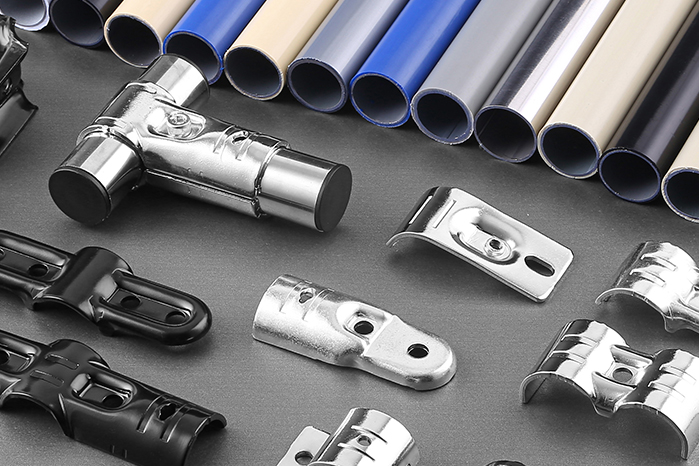
The landscape of industrial infrastructure is undergoing a seismic shift. As we navigate the complexities of 2026, the reliance on static, heavy-duty permanent fixtures is rapidly giving way to high-tech modularity. The metal joint pipe sector, once considered a niche segment of warehouse equipment, has moved to the forefront of the “Smart Factory” revolution. For 2B procurement leaders and operations directors, staying ahead of these trends is no longer optional—it is the difference between a fluid supply chain and a stagnant one.
From the integration of advanced material science to the rise of sustainable “circular” manufacturing, the evolution of tube and joint systems is mirroring the broader industrial push toward agility. Here are the top five trends defining the industry this year.
- The Rise of “Karakuri” and Zero-Energy Automation
In 2026, energy efficiency has moved beyond the power grid and onto the shop floor. We are seeing a massive surge in “Karakuri” Kaizen—mechanical automation that uses gravity, springs, and counterweights instead of motors or sensors. Metal joint pipe structures are the primary medium for these systems. By using precision joints and inclined roller tracks, manufacturers are creating “self-sorting” racks and “auto-feeding” workstations that require zero electricity. This trend reduces carbon footprints and eliminates the maintenance costs associated with electrical actuators.
- High-Performance Coating Tech (Beyond Plastic)
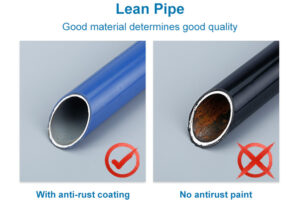
The standard PE-coated pipe is being joined by a new generation of high-performance surfaces. In sectors like semiconductor fabrication and electric vehicle (EV) battery production, standard coatings are insufficient. The trend in 2026 is toward “multi-functional” surfaces—pipes featuring permanent anti-static (ESD) properties integrated into the coating itself, or antimicrobial finishes for pharmaceutical cleanrooms. These advanced materials ensure that the modular framework contributes to the integrity of the product being manufactured.
- Rapid Prototyping with Digital Twin Integration
The gap between digital design and physical installation is closing. Industrial engineers are now utilizing Digital Twin software to simulate load-bearing stress on tube and joint systems before a single bolt is tightened. This allows for the optimization of material usage—ensuring structures are “lean” in both philosophy and physical mass. By simulating the flow of parts through a modular rack digitally, companies are reducing installation errors by over 40%.
- Circular Economy and “Asset Harvesting”
Sustainability in 2026 is focused on the “Second Life” of equipment. Unlike welded steel, which depreciates and eventually requires energy-intensive recycling, the modular metal joint pipe is being treated as a reusable asset. Large-scale 2B enterprises are implementing “harvesting” protocols where decommissioned assembly lines are stripped of their pipes and joints, which are then re-inventoried for the next project. This trend is turning “equipment expenses” into “reusable capital.”
- Increased Demand for High-Tensile Thin-Wall Engineering
The industry is moving toward “Stronger yet Lighter.” Advanced cold-rolling techniques now allow for thinner steel walls that maintain higher tensile strength than the thick-walled pipes of the past. This makes mobile kitting carts and workstations easier to maneuver for human operators and Automated Guided Vehicles (AGVs), reducing the strain on drive motors and improving overall facility safety.
Leading the Modular Revolution: The JunYi Strategy
At JunYi, we have anticipated these shifts and aligned our manufacturing capabilities to meet the rigorous demands of the 2026 industrial market. We recognize that our 2B partners are looking for a competitive edge in a global economy that values speed and precision. As a dedicated manufacturer, we don’t just supply hardware; we provide the technological backbone for these emerging trends.
Our commitment to tube and joint systems is rooted in the belief that modularity is the ultimate form of future-proofing. We have optimized our production lines to ensure that every metal joint pipe we produce meets the high tolerances required for both manual and automated assembly environments. In an era where “good enough” is a risk to the bottom line, we prioritize excellence in every component.
Our Technological Advantage
The reason we are a preferred partner for global OEM and ODM projects lies in our specialized manufacturing approach. According to our Technology Advantages, we utilize state-of-the-art automated stamping and cold-rolling processes that ensure total consistency across massive production runs.
We understand that for our partners in the automotive and electronics sectors, a single joint that fails to meet the torque specification can halt an entire line. This is why we focus on:
- Precision Stamping: Ensuring that every joint provides 100% surface contact for maximum friction grip.
- Material Integrity: Using high-grade cold-rolled steel that supports the high-cycle demands of 24/7 industrial operations.
- Surface Excellence: Our plating and coating processes are designed to withstand the oils, chemicals, and physical impacts of a modern factory.
Tailored OEM/ODM Excellence for a Global Market
As the 2B market moves toward more specialized applications, our role as an ODM (Original Design Manufacturer) has become more critical than ever. We work directly with our clients to develop custom tube and joint systems that address specific “Karakuri” requirements or unique ESD-safe environments. We provide the technical documentation and structural guidance necessary for our partners to implement the top trends of 2026 successfully.
Our philosophy at JunYi is simple: we provide the modular building blocks, and you provide the vision. Together, we create a manufacturing environment that is not only efficient today but is inherently ready for the innovations of tomorrow. By choosing to work with us, you are choosing a partner that understands the “Science of Lean” and has the manufacturing muscle to back it up.
In the rapidly evolving world of 2026, the factory of the future is being built one joint at a time. Let us help you ensure that your facility is the most agile, sustainable, and efficient in your industry.