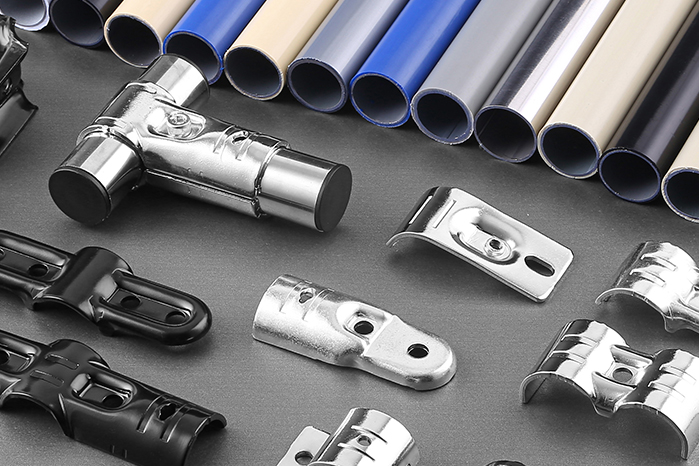
In the rigorous world of industrial chemical management, infrastructure is under constant assault. For facility managers and environmental safety officers, the storage and transport of corrosive agents present a unique set of engineering challenges. Traditional steel racking and piping systems, while physically strong, often succumb to the invisible forces of oxidation and chemical degradation. To ensure the safety of personnel and the longevity of assets, the implementation of corrosion-free pipes has transitioned from a best practice to an operational necessity.
A high-performance tube and joint systems approach provides the foundation for a facility that is not only organized but fundamentally resilient. By understanding the science of material interaction and environmental stress, B2B enterprises can design chemical storage areas that mitigate risk and maximize long-term return on investment.
The Hidden Cost of Corrosion in Chemical Facilities
Corrosion is more than an aesthetic issue; it is a structural liability. In chemical storage zones, airborne vapors from acids, alkalis, and salts can settle on metal surfaces, initiating electrochemical reactions that eat away at the core material. For traditional welded steel racks, this often begins at the joints where the protective paint has chipped or where the heat of welding has altered the metal’s molecular structure.
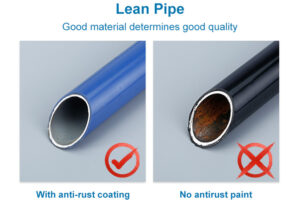
When a storage rack or transport line fails due to corrosion, the results are catastrophic. Beyond the immediate cost of equipment replacement, facilities face the high price of material leakage, environmental fines, and potential workplace injuries. To combat this, the industry has shifted toward “shielded” infrastructure—specifically, cold-rolled steel tubes that are encapsulated in protective plastic resins. This composite design offers the “best of both worlds”: the mechanical strength of steel with the inert, non-reactive properties of high-density polymers.
The Science of Barrier Protection: Why Surface Integrity Matters
The efficacy of corrosion-free pipes depends entirely on the quality of their barrier layer. In a 2B setting, where equipment must endure 24/7 exposure, a simple spray-on paint is insufficient. Industrial-grade lean pipes utilize a fusion-bonded or high-adhesion plastic coating (such as PE or ABS) that creates a hermetic seal around the steel core.
- Chemical Stability: Unlike standard iron or galvanized surfaces, these plastic coatings do not react with moisture or common industrial solvents. This prevents the formation of “red rust” (iron oxide) which can weaken the structural wall of the pipe over time.
- Surface Tension and Scaling: One of the secondary benefits of a plastic-coated pipe is its smooth surface. In areas where chemical containers might leak, a smooth surface is easier to decontaminate and does not allow for the accumulation of hazardous “scaling” or dried chemical residues.
- UV and Atmospheric Resistance: Many chemical storage areas are partially exposed to the elements or high-intensity industrial lighting. High-quality tube and joint systemsinclude UV-stabilizers in the coating, preventing the plastic from becoming brittle or cracking under radiation.
Modular Flexibility in Hazardous Zones
One of the greatest advantages of using modular pipe systems in chemical areas is the ability to adapt. Chemical inventories are rarely static; the size and quantity of containers fluctuate. A modular system allows engineers to adjust the height and width of shelving units without the need for hot work (welding), which is often restricted in areas storing flammable or reactive chemicals. This “zero-spark” assembly is a critical safety feature that allows for continuous facility improvement without increasing fire risks.
Engineering Resilience: The JunYi Advantage in Corrosive Environments
At JunYi, we recognize that for our B2B partners, equipment failure is not an option. As a specialized manufacturer of modular infrastructure, we have optimized our production processes to meet the stringent demands of chemical-heavy sectors. We don’t just provide hardware; we provide a protective ecosystem designed to survive where others fail.
Our commitment to providing corrosion-free pipes is backed by our specialized manufacturing technology. According to our Technology Advantages, we utilize a high-precision coating process that ensures the plastic layer is uniform in thickness and bonded with exceptional adhesion to the steel substrate. This prevents the “delamination” or peeling that often plagues lower-tier products when they are subjected to temperature fluctuations or physical impacts.
Precision Manufacturing for Global OEM/ODM Standards
We understand that in the 2B sector, consistency across a large-scale deployment is paramount. Whether you are outfitting a single laboratory or a multi-national chemical distribution center, every tube and joint systems component must meet the same high standard of chemical resistance.
At JunYi, we take pride in our role as a silent partner in your facility’s safety. Our manufacturing philosophy focuses on the “Science of Lean”—removing the waste of frequent equipment replacement and the risk of structural failure. Our pipes are built to endure, utilizing high-grade cold-rolled steel and specialized resins that have been tested against a wide array of industrial agents. Because we offer extensive OEM and ODM services, we can tailor the thickness and material of the coating to meet the specific pH levels and environmental stressors of your unique operation.
A Sustainable and Secure Future
By implementing our corrosion-resistant solutions, your business is making a choice for long-term sustainability. Our systems are designed to last for decades, reducing the resource consumption associated with the constant manufacturing and disposal of short-lived steel alternatives.
At JunYi, our goal is to help you build a workplace that is as safe as it is efficient. Through the use of our corrosion-free pipes, we provide the stability you need to manage hazardous materials with confidence. Let us help you protect your assets and your people with the most resilient modular hardware on the market today.