Warehouse material handling has a hidden tax. Every time a worker walks to retrieve a box, every minute spent repositioning a pallet, every bottleneck at a pick face—these are not labor costs. They are flow costs. And flow costs compound.
In our experience, warehouse teams can spend a significant share of their labor time walking and searching. The actual value-added work—picking, packing, staging—occupies a fraction of the shift. This is not a people problem. It is a layout and flow problem.
An industrial roller track system addresses exactly this gap. It turns static storage into dynamic flow. It lets gravity do the walking. And it does this without motors, without complex controls, and without a major capital outlay.
The Real Cost of Moving Things by Hand
Consider a standard pallet rack with deep storage. To access a box at the back, a worker must remove the boxes in front, pick the target, and restack the rest. This is called “product handling,” but it is really product re-handling. Every touch adds cost and risk.
Flow-through storage changes this equation. When pallets or cartons are loaded from one side and retrieved from the other, the system enforces First-In-First-Out (FIFO) rotation automatically. No digging. No restacking. No wasted motion.
The cost savings are not theoretical. Gravity-fed roller tracks can help shorten pick times and improve material flow, supporting more efficient warehouse operations. The mechanism is simple: instead of workers moving to the product, the product moves to the worker.
How an Industrial Roller Track System Changes the Flow
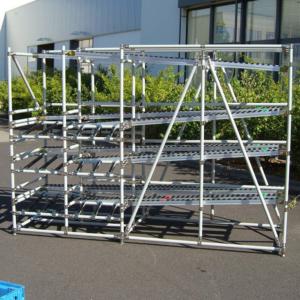
An industrial roller track system consists of parallel metal rails fitted with evenly spaced wheels or rollers. The track is mounted at a slight incline—typically 3 to 9 degrees. Gravity does the rest.
Cartons, totes, or pallets slide along the rollers with minimal friction. The leading unit stops at the front of the lane, ready for picking. When it is removed, the next unit slides forward into position. This creates a continuous, self-regulating flow of material to the pick face.
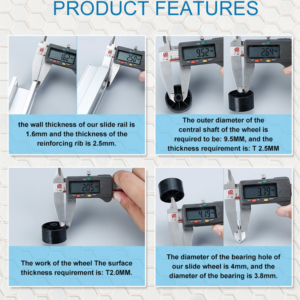
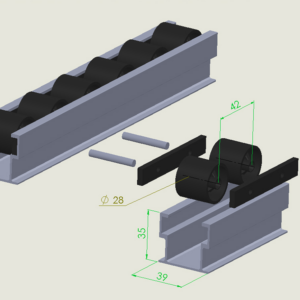
Junyi’s JY-2045 roller track, for example, uses a 40mm wide galvanized sheet metal construction with a 0.8mm wall thickness and a maximum load‑bearing capacity of 150kg per meter. The rollers are available in PP or ESD materials, with color options including black, white, and yellow. This specification covers the majority of carton and tote handling applications in warehouses.
The key advantage is non‑powered operation. No electricity. No motors. No control panels. This reduces installation complexity, eliminates ongoing energy costs, and simplifies safety compliance in manual handling areas.
What to Look for in a Roller Track System
Not all roller tracks are created equal. The right system for your warehouse depends on three factors: load, product type, and environment.
Load capacity is the first filter. The JY-2045handles 100kg per meter. For heavier unit loads, you may need wider tracks or additional support rails. The load rating depends on the roller spacing and the specific application requirements. Exceed this spacing and the effective capacity drops.
Wheel material matters more than most buyers realize. Standard PP wheels work for general‑purpose cartons and totes. But for electronics assembly or sensitive component storage, ESD (electrostatic discharge) wheels are essential to prevent static damage. The JY-2045 offers both options, so you can specify PP for general cartons or ESD for electronics and static-sensitive components.
Track width determines what fits. The 40mm width is suitable for most cartons and totes. For larger items—pallets, drums, or oversized containers—wider tracks or multi‑track configurations may be required.
Corrosion resistance is critical in humid or washdown environments. The galvanized sheet metal construction provides a baseline level of protection. For more aggressive conditions, zinc‑plated or stainless steel options are available. Junyi can supply these variants on request, ensuring the track material matches your operating environment.
Installation and reconfiguration speed is a practical consideration that often gets overlooked. Roller tracks that drop into existing rack beams without tools can be installed in minutes. This matters for warehouses that frequently reconfigure pick faces or seasonal storage layouts.
Where Roller Tracks Deliver the Most Value
Order picking zones are the primary application. Flow lanes bring inventory to the picker, reducing walk time and increasing picks per hour. The picking face remains constantly replenished as upstream inventory slides forward. This is particularly effective for high‑turnover SKUs.
Assembly line feed is another strong use case. Components staged on roller tracks slide to the workstation as needed, eliminating the need for workers to leave their stations to fetch materials. This keeps assembly flow continuous and reduces idle time.
Buffering and staging areas benefit from roller tracks that create temporary storage with natural FIFO rotation. Incoming product flows in from the receiving side; outgoing product is pulled from the picking side. No sorting, no rearranging.
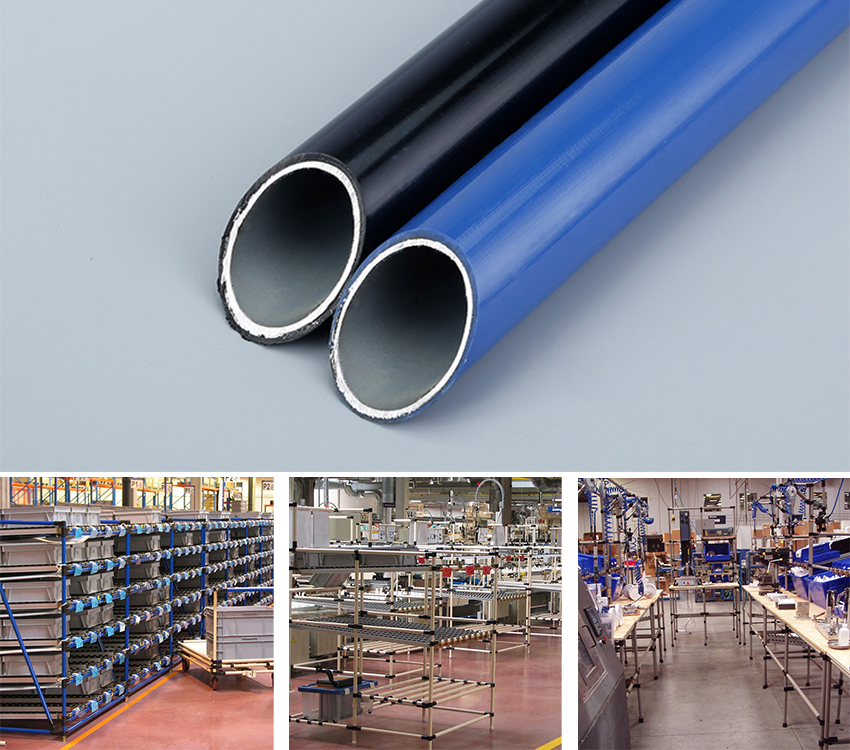
Lean manufacturing cells frequently integrate roller tracks with lean pipe framing systems. The modular nature of both systems allows rapid reconfiguration as production mixes change. This is not a permanent installation—it is a flexible tool that adapts to the operation.
Making the System Work for Your Warehouse
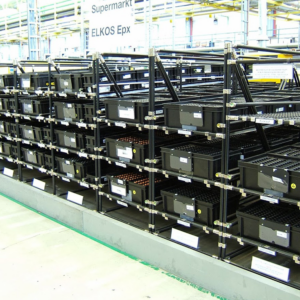
Implementation starts with a simple observation: walk the warehouse and watch where workers stop, reach, and wait. Those are the points where flow breaks down. Those are where roller tracks belong.
The incline angle is critical. Too steep and cartons accelerate too quickly, risking damage or overshoot. Too shallow and they stall. A 5% to 6% slope is a common starting point for most carton sizes. Testing with actual product is the only way to confirm the right angle for your specific load.
Roller spacing and track quantity also affect performance. For heavier loads, multiple tracks can be installed in parallel to distribute weight. For smaller or irregular cartons, closer roller spacing prevents tipping and ensures smooth travel.
Maintenance is minimal but not zero. Rollers should be inspected periodically for wear or debris. The JY-2045features a modular roller track design, making it easier to configure and maintain as operating needs change. This can help support reliable operation and control long-term maintenance costs.
At Junyi, we manufacture roller tracks with consistent quality control and offer cutting and assembly services to match your exact specifications. Whether you need standard lengths or custom configurations, the goal is the same: reduce handling, improve flow, and let gravity do the work.
An industrial roller track system does not require a warehouse overhaul. It requires a different way of thinking about material flow. Stop moving people to the product. Let the product come to the people. Junyi builds systems that make that shift practical, reliable, and cost‑effective from day one.