In the sophisticated world of automotive manufacturing, the assembly line is a choreographed dance of high-tonnage materials and micro-millimeter precision. While much of the industry’s focus remains on robotic arms and AI-driven logistics, the physical foundation of floor-level mobility—the industrial caster—is often the silent determinant of operational uptime. In a facility where a single minute of downtime can cost thousands of dollars, the mechanical integrity of industrial casters is not merely a utility; it is a critical engineering requirement.
The Physics of High-Load Mobility
Automotive plants operate under unique physical constraints. Unlike standard warehousing, auto assembly involves “dynamic loading”—the constant shifting of weight as parts are added to a vehicle chassis. This requires a deep understanding of structural load distribution. When a 2,000-pound engine block is lowered onto a mobile kitting cart, the casters must absorb a massive instantaneous “shock load.”
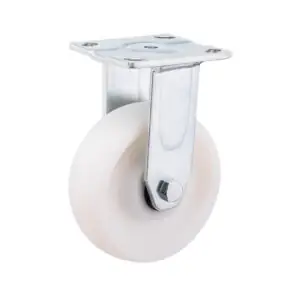
Standard wheels often fail under these conditions because the energy of the impact concentrates on the kingpin—the central bolt that holds the swivel together. High-performance industrial casters for sale in the 2B sector utilize kingpinless designs. By employing a CNC-machined raceway that distributes the weight across a larger circumference of hardened steel balls, these units eliminate the “snapping” point common in cheaper alternatives. This engineering choice ensures that even under the repetitive stress of a three-shift production cycle, the swivel remains fluid and the cart remains controllable.
Material Science and Floor Integrity
The interaction between the caster wheel and the factory floor is a matter of advanced polymer science. Most modern automotive plants utilize high-grade epoxy-coated floors to maintain cleanliness and facilitate AGV (Automated Guided Vehicle) navigation. However, the wrong wheel material can “de-bond” or “flat-spot,” leading to significant vibration.
Polyurethane (PU) is the gold standard here, but not all PU is created equal. B2B applications require high-rebound, chemically bonded polyurethane that resists “hydrolysis”—a breakdown caused by moisture or humidity. When industrial casters utilize high-durometer polyurethane, they provide a low rolling resistance that is vital for manual push-pull operations. This reduces the “initial start force” required to move a cart, directly lowering the risk of musculoskeletal injuries for plant personnel. Furthermore, these materials are non-marking, ensuring that the facility’s expensive floor coatings remain intact and free of debris that could interfere with robotic sensors.
Ergonomics as a Metric of Productivity
In a professional manufacturing environment, ergonomics is a productivity metric. If a delivery rack is difficult to maneuver, the cycle time of the entire cell increases. The “swivel lead”—the distance from the vertical centerline of the swivel section to the centerline of the wheel—is a critical specification. A longer lead makes the caster easier to swivel but increases the “swing room” required.
Modern automotive logistics demand a balance: casters that offer effortless tracking for tow-lines (tugging) but remain agile enough for manual positioning in tight assembly cells. The integration of precision ball bearings, shielded from the metallic dust and welding sparks common in body shops, ensures that the effort required to move parts remains consistent over the lifespan of the equipment.
Engineering Your Success: The JunYi Advantage
When the stakes are this high, procurement and engineering teams require more than just a component; they require a manufacturing partner who speaks the language of industrial durability. At JunYi, we have positioned ourselves as a premier provider of high-capacity mobility solutions specifically designed for the rigors of the 2B industrial sector.
As a dedicated specialist in OEM and ODM services, we recognize that no two automotive plants are identical. A stamping plant in Michigan has different environmental challenges than an EV assembly plant in Shanghai. Our role is to bridge that gap through precision manufacturing. We don’t just supply industrial casters for sale; we provide the mechanical foundation for your material handling infrastructure.
Our Commitment to B2B Excellence
Our business model is built on supporting the specific needs of original equipment manufacturers and large-scale industrial distributors. We understand that in a 2B context, “reliability” is synonymous with “specification-accuracy.” When we collaborate with your engineering team, we ensure that every unit produced in our facility meets the exact durometer, load capacity, and mounting patterns required for your specific application.
By leveraging our advanced production capabilities, we offer:
- Custom Material Formulation: Tailoring polyurethane blends to suit your specific floor types and chemical exposure.
- Rigorous Stress Testing: Ensuring our industrial casters can handle the high-duty cycles of automotive tow-lines.
- ODM Design Integration: Working with your R&D department to create bespoke mounting solutions for specialized kitting racks or engine stands.
We take pride in our ability to scale production while maintaining the tight tolerances required by international automotive standards. At JunYi, we believe that “we” are an extension of your assembly line. Our focus on quality control means that when our products reach your floor, they have already been vetted for the extreme conditions they will face.
The Future of Plant Mobility
As the automotive industry shifts toward electric vehicles and modular manufacturing, the demands on floor-level logistics will only increase. Battery packs add significant weight, and the need for precision-timed delivery is more acute than ever. We are constantly evolving our manufacturing processes to meet these new challenges, ensuring that our industrial casters remain the benchmark for stability and durability.
In conclusion, the selection of a caster is a decision that impacts worker safety, floor longevity, and overall production efficiency. By choosing a partner that understands the science of mobility, you are securing the future of your facility. We invite you to explore how our expertise in OEM and ODM services can optimize your plant’s performance. When precision matters, JunYi is the partner you can trust to keep your production in motion.