Your outdoor logistics infrastructure operates in conditions that indoor facilities never face. Pipes supporting material handling systems, conveyor infrastructure, or storage racks are exposed simultaneously to salt spray, temperature cycling, rain, UV radiation, and airborne contaminants. A pipe material that performs adequately indoors degrades rapidly when relocated outdoors.
The question isn’t whether standard steel survives outdoor service—it does, but with consequences. The real question is whether the cost savings of initial material selection outweigh the operational burden of accelerated maintenance and premature replacement.
What Makes Outdoor Logistics Environments Uniquely Corrosive
Indoor corrosion depends primarily on humidity and any introduced chemicals. Outdoor environments add multiple simultaneous stressors that accelerate degradation mechanisms.
Salt exposure is a primary driver in coastal regions or where road salt drifts during winter. Chloride ions penetrate protective oxide layers on steel and initiate localized corrosion. The severity depends on proximity to salt sources, local climate patterns, and how frequently salt spray reaches your infrastructure.
Temperature cycling—freeze-thaw cycles, daily heating-cooling swings—creates mechanical stress. Water that penetrates coating or fastener joints expands when frozen, placing stress on adhesion and joint integrity. As temperatures rise, water evaporates, allowing fresh moisture to penetrate. This cycle repeats continually in seasonal climates.
Rain and standing water create persistent moisture conditions. Unlike indoor facilities where moisture is temporary, outdoor logistics areas remain wet for hours or days. If water pools in pipe joints or collects on horizontal surfaces, corrosion progresses continuously rather than intermittently.
UV radiation degrades protective coatings over time. Coatings that remain stable indoors may become brittle and crack outdoors, losing their barrier function. Once coating integrity is compromised, the underlying substrate becomes vulnerable.
Airborne contaminants—industrial emissions, agricultural dust, salt particles in coastal areas—deposit on pipe surfaces and create localized corrosion cells. These contaminants aren’t controlled in outdoor environments the way indoor air quality can be managed.
Combined, these factors create an environment far more aggressive than any single factor suggests. A pipe material that tolerates one stressor may fail rapidly when multiple stressors act simultaneously.
Why Standard Steel Pipe Deteriorates Faster Than Expected Outdoors
Standard steel relies on a thin, passive oxide layer to resist corrosion. This layer works reasonably well in dry conditions or controlled indoor environments. Outdoors, that protection breaks down.
Moisture continuously attacks the oxide layer. Where water pools or salt accumulates, the oxide dissolves faster than it reforms. Once breached, corrosion progresses through the base metal. Unlike indoor rusting—often surface-level—outdoor corrosion frequently penetrates deeply because the corrosive environment persists.
Fasteners corrode independently of the pipe itself. A bolted joint may have corrosion-resistant pipe but ordinary steel bolts. The bolts corrode first, seizing solid and preventing future adjustments or replacement. Seized fasteners mean you can’t modify the structure without cutting bolts, adding labor and cost.
Paint or traditional epoxy coatings degrade outdoors faster than indoors. UV exposure causes the coating to become brittle and crack. Once cracks form, moisture enters beneath the coating, trapping corrosive electrolyte against the substrate. This trapped moisture accelerates corrosion below the coating while the surface appears intact.
The result is that standard steel outdoor installations require more frequent inspection, more frequent re-coating or paint reapplication, and more frequent component replacement than initially anticipated. The cost savings from choosing cheaper material upfront disappear into accumulated maintenance expenses.
Understanding Different Material Options and Their Trade-offs
No single material is optimal for all outdoor logistics applications. Each option offers different advantages and different limitations.
Galvanized steel applies a zinc coating through hot-dip galvanizing. Zinc corrodes preferentially to steel, sacrificing itself to protect the base metal. Galvanizing provides reliable outdoor protection, though the timeline for zinc consumption depends on local corrosion severity.
In mild climates, galvanized pipe performs well for 10+ years. In aggressive coastal or salt-spray environments, zinc consumption accelerates significantly. Galvanized pipe is cost-effective but requires periodic inspection to confirm zinc thickness remains adequate.
Aluminum pipe naturally forms a protective oxide layer (alumina) that resists corrosion in most environments. Aluminum resists salt spray better than bare steel. However, aluminum can suffer localized pitting in chloride-rich environments if conditions align to enable pitting initiation. Aluminum is lighter than steel, reducing structural loads and installation labor. Aluminum costs more than galvanized steel but less than stainless.
Stainless steel resists corrosion through chromium content that forms a passive film. Stainless performs well in most outdoor environments, including salt spray, provided chloride concentration doesn’t exceed the material’s tolerance threshold.
Different stainless grades offer different chloride resistance; higher grades cost more but resist more aggressive environments. Stainless is the most expensive option but requires minimal maintenance.
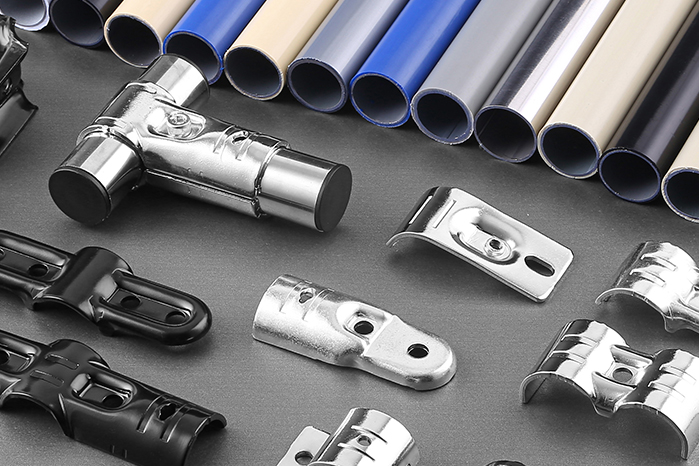
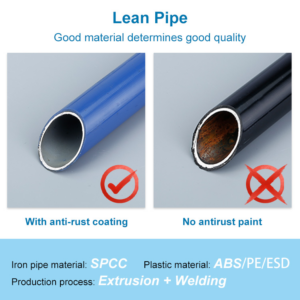
Coated steel pipe applies a factory-applied protective layer—epoxy, polyester, or specialized coatings—over steel. This combines steel’s cost advantage with protection similar to paint, but applied under controlled factory conditions.
Quality coated pipe provides reliable protection, though coating durability outdoors depends on the specific coating chemistry and application quality. Coated steel bridges the cost gap between galvanized and stainless.
We at Junyi offer rust resistant pipe options across multiple material systems and coating technologies. Each option reflects different trade-offs between cost, protection level, and maintenance burden.
Matching Material Selection to Your Specific Exposure Profile
Material selection should reflect your actual outdoor conditions, not worst-case assumptions.
Mild outdoor exposure (inland locations, no salt spray, moderate temperature cycling) often tolerates galvanized steel adequately. The zinc coating provides protection sufficient for many years. This option suits operations where budget is constrained and replacement intervals of 8–12 years are acceptable.
Moderate salt exposure or high-moisture environments (coastal regions with moderate salt spray, or inland locations with frequent rain and high humidity) often justify aluminum or coated steel. These materials resist salt spray and moisture better than bare or galvanized steel. Protection is more reliable, and maintenance intervals are longer.
Severe salt exposure (immediate coastal areas, salt-storage facilities, or operations where road salt directly contacts infrastructure) typically require stainless steel or premium-grade corrosion resistant pipe. These materials tolerate aggressive chloride environments without accelerated corrosion. They cost more upfront but eliminate the maintenance cycle and provide confidence in long-term reliability.
Document your actual outdoor conditions honestly. Note proximity to salt sources (ocean, road salt, industrial emissions). Record temperature ranges and seasonal cycling patterns. Observe how long water remains on horizontal surfaces after rain. This information guides material selection far more accurately than generic assumptions about “outdoor” service.
If you’re uncertain about your exposure severity, start with a conservative choice (better material protection) rather than optimistic assumptions. Discovering that your initial material choice was inadequate is far more expensive than choosing a more protective material that turns out to have been unnecessary.
Installation and Maintenance Practices That Preserve Material Advantage
Material selection is only part of durability. How you install and maintain the pipe determines whether the material’s corrosion resistance actually protects you.
Fastener compatibility matters. If you install rust resistant pipe using ordinary steel bolts, the bolts corrode first, seizing solid. Use fasteners compatible with your pipe material: stainless bolts for stainless pipe, galvanized bolts for galvanized pipe, or coated bolts for coated pipe.
Coating integrity requires attention, especially for galvanized and coated systems. Inspect annually for chips, scratches, or areas where coating has been damaged. Small defects can be touch-up coated before they expand. Damage that exposes bare metal should be addressed promptly, before corrosion initiates.
Moisture management extends material life. Design pipe routing to slope or drain, preventing water from pooling in low spots. Ensure fastener joints are sealed to prevent moisture from wicking into the connection. For critical installations, apply thin protective coatings to cut edges or fabrication areas where factory protection was disturbed.
Inspection scheduling should match your exposure severity. Mild outdoor service benefits from annual inspection. Moderate salt exposure warrants inspection every 6–12 months. Severe salt spray exposure may justify quarterly inspection. Document findings so you can recognize whether degradation is progressing within normal expectations or accelerating unexpectedly.
Building a Realistic ROI Model for Your Operation
Comparing pipe materials requires honest accounting of total costs, not just initial purchase price.
Galvanized steel costs less initially but requires inspection and periodic recoating. Stainless costs significantly more but eliminates most maintenance. The break-even point depends on your specific conditions, replacement labor costs, and acceptable inspection frequency.
Consider downtime cost. If corroded pipe failing causes operational disruption, the cost of unplanned replacement labor, product loss, or production delay far exceeds the material cost difference. This risk favors more corrosion-resistant materials.
Consider maintenance labor. If your operation can’t perform maintenance as frequently as inferior materials demand, invest in better materials that extend maintenance intervals. If you have reliable maintenance capacity, less expensive materials with higher inspection frequency may work.
At Junyi, we can help model the economics for your specific application, comparing galvanized, aluminum, coated, and stainless options across your expected service interval. The modeling isn’t universal—it’s specific to your exposure conditions, maintenance capacity, and downtime costs.
Matching Material to Outdoor Reality
Outdoor logistics environments demand corrosion protection that indoor facilities never require. Whether that protection comes from galvanized coating, aluminum resistance, factory coatings, or stainless chemistry depends on your specific exposure conditions and operational constraints.
The material that costs least initially is often the material that costs most over its actual service life. Choosing rust resistant pipe based on your documented outdoor conditions, not generic assumptions, is how you balance protection against cost.