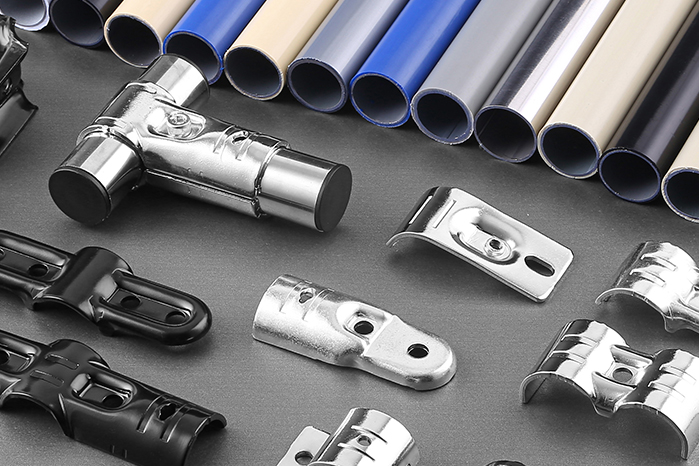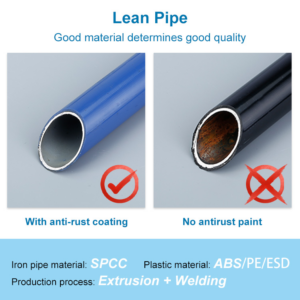
Coated pipe plays a different role from conventional industrial piping. In lean manufacturing systems, it is used as a structural and material-handling component for workstations, racks, carts, flow systems, and other flexible production setups. Its value comes from combining a steel tube core with protective plastic coatings that improve durability while making lean structures easier to assemble and reconfigure.
The corrosion protection of coated pipe comes from creating a barrier around the steel tube rather than exposing bare metal directly to the surrounding environment. This is particularly important for lean manufacturing structures that may remain in workshops or production areas for extended periods.
The outer plastic layer, typically PE or ABS depending on the application, covers the steel surface and helps isolate it from air, moisture, and everyday environmental exposure. This external coating also gives the lean tube a smoother and more durable surface for use in workstations, racks, carts, and other material-handling structures.
Protection is also provided inside the tube. Internal pipe coating forms an additional rust-prevention layer on the inner steel surface, complementing the protection provided by the external plastic coating. Together, the internal pipe coating and outer PE or ABS layer help protect the steel tube from moisture and environmental exposure, supporting longer-lasting use in lean manufacturing applications.
Why Coated Pipe Provides Better Corrosion Protection for Lean Systems
Steel is strong and rigid, but unprotected steel surfaces can be affected by moisture, humidity, and prolonged exposure to the surrounding environment. In lean manufacturing environments, where coated pipes are used for workstations, racks, carts, and material-handling structures, maintaining the condition of the steel tube helps extend the useful life of the structure.
Coated pipe addresses this exposure through a protective composite design. The outer PE or ABS plastic layer creates a physical barrier between the steel surface and the surrounding air and moisture, helping reduce direct environmental exposure. An internal anti-corrosion coating provides an additional layer of protection inside the steel tube.
This protection is particularly useful in humid environments, coastal areas, workshops, and other production settings where ordinary steel components may be exposed to moisture over long periods. The goal is not to make coated pipe a substitute for industrial fluid-transfer piping, but to provide a more durable structural tube for lean production systems.
The result is a coated tube that combines the strength of a steel core with the environmental protection of plastic and anti-corrosion layers, making it suitable for long-term use in flexible lean manufacturing applications.
How Coating Creates a Protective Barrier on Lean Tubes
The corrosion protection of coated pipe comes from creating a barrier around the steel tube rather than exposing bare metal directly to the surrounding environment. This is particularly important for lean manufacturing structures that may remain in workshops or production areas for extended periods.
The outer plastic layer, typically PE or ABS depending on the application, covers the steel surface and helps isolate it from air, moisture, and everyday environmental exposure. This external coating also gives the lean tube a smoother and more durable surface for use in workstations, racks, carts, and other material-handling structures.
Protection is also provided inside the tube. An internal anti-corrosion or rust-prevention layer helps reduce corrosion on the inner steel surface, complementing the protection provided by the outer plastic coating. The combination of external plastic protection and internal rust prevention gives the coated pipe a more comprehensive corrosion-resistant structure.
The connection system is equally important to lean-tube construction. Compatible rounded joints and other lean-tube components allow coated pipes to be assembled into practical structures without relying on permanent welding. This makes the system easier to configure, modify, and reuse as production requirements change.
The result is more than a coated steel tube. It is a modular component for lean production that combines steel strength, external environmental protection, internal rust prevention, and flexible connection options.
Choosing the Right Coated Pipe for Lean Manufacturing Applications
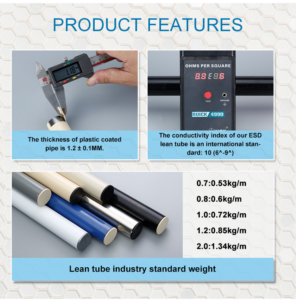
Different lean manufacturing environments may require different coated pipe configurations. Instead of selecting a tube according to fluid chemistry or pressure requirements, the more relevant considerations are the working environment, structural application, surface requirements, and desired level of corrosion protection.
PE coated pipes are suitable for conventional lean production applications where durable surface protection and cost-effective performance are priorities. ABS coated pipes can be considered for applications that require a different combination of surface durability, strength, and environmental resistance. For environments where static control is important, ESD plastic coated pipes provide an alternative designed around anti-static requirements.
Environmental conditions should also be considered. Humid, coastal, or rainy environments can increase the risk of corrosion on exposed steel, making corrosion-resistant coated pipe a practical choice. We at Junyi also offer stainless steel pipe options for applications where a higher level of corrosion resistance or temperature performance is required.
The right coated pipe should therefore be selected according to the intended lean manufacturing application rather than the requirements of fluid transportation. This keeps the material choice aligned with how the tube will actually be used in workstations, racks, carts, production lines, and other modular structures.
Manufacturing Quality Determines Coated Pipe Performance
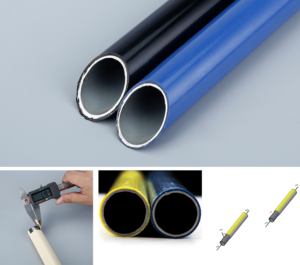
For coated pipe used in lean manufacturing, corrosion protection starts with the quality of the tube and coating process itself. The steel tube needs to provide the required structural strength, while the outer plastic coating must be applied consistently to create a reliable protective surface.
Our coated pipe manufacturing process at Junyi includes tube forming, plastic coating, cooling, cutting, and packaging. During coating, an extruder applies the plastic layer to the surface of the round steel tube before the coated tube is cooled and prepared for use.
Quality control is also important because defects in the steel tube can become difficult to identify after the plastic layer is applied. We at Junyi describe gas testing before plastic encapsulation as part of its quality-control process, helping identify weld or surface issues before they are covered by the outer coating.
For the end user, this means coated pipe performance depends not only on the selected PE, ABS, or ESD coating but also on the consistency of the underlying steel tube and the manufacturing process used to combine the materials.
Monitoring Coating Integrity Before Failure Occurs
Coatings are protection, not permanence. Regular inspection catches early degradation before structural compromise occurs.
Establish a visual inspection protocol. Every 12–24 months, examine accessible pipe sections for blistering, peeling, color changes, or areas where coating appears to have separated from the substrate. These signs indicate the barrier function is compromised. Blistering specifically suggests moisture has breached the coating and is reacting with the substrate underneath.
For critical systems, consider non-destructive testing methods. Electromagnetic coating thickness gauges measure remaining film thickness without damaging the pipe. This objective measurement reveals whether coating is degrading uniformly (general thinning over time) or in localized spots (suggesting corrosion breakthrough or application defects). Knowing which pattern you’re seeing helps determine whether the issue is age-related or points to a specific cause.
Monitor system conditions for changes. If fluid chemistry shifts—pH changes, new contaminant introduction, temperature increases—re-evaluate whether your original coating selection still suits the environment. A coating rated for one temperature range may degrade if operating conditions shift significantly.
Some corrosion resistant pipe installations benefit from periodic touch-up of small damaged areas before they propagate into larger failures. This preventive maintenance is far cheaper than replacing compromised sections.
When Coated Pipe Makes Economic Sense
The value of coated pipe in lean manufacturing comes from more than corrosion protection alone. Its modular design can support flexible production layouts, while the protective coating helps reduce premature deterioration of the steel tube in demanding working environments.
For manufacturers that frequently adjust workstations, racks, carts, or material-handling structures, lean tubes offer another economic advantage: the components can be assembled and reconfigured through compatible joints rather than relying on permanent welded structures. This makes it easier to adapt production equipment as workflows change.
The choice between conventional steel tube, coated pipe, stainless steel pipe, or different plastic coating options should depend on the actual working environment and application. In humid or corrosion-prone environments, the additional protection provided by coated pipe can help improve component durability. In anti-static applications, ESD-coated options may provide a more appropriate solution.
We at Junyi provide PE, ABS, and ESD plastic coated pipe options, as well as stainless steel pipe products, allowing manufacturers to select a tube configuration according to their lean production requirements and environmental conditions.
From Exposed Steel to Protected Lean Tubes
Coated pipe provides a practical way to combine the structural strength of steel with the protective benefits of plastic and anti-corrosion coatings. The outer PE or ABS layer helps shield the tube from air, moisture, and everyday environmental exposure, while the internal rust-prevention layer provides additional protection inside the steel tube.
For lean manufacturing environments, the value extends beyond corrosion resistance. Coated pipes can be combined with compatible rounded joints and other lean components to create flexible workstations, racks, carts, and material-handling structures that can be assembled and adapted as production requirements change.
For manufacturers looking to improve the durability and flexibility of lean production systems, selecting the right coated pipe according to the working environment and intended application is a more relevant consideration than treating it as conventional fluid-transfer piping.