In the world of industrial fluid logistics, the internal surface of a transport system is often a “blind spot” for many maintenance teams—until a failure occurs. Whether a facility is moving cooling water, chemical processing agents, or specialized lubricants, the interface between the fluid and the pipe wall is a site of constant kinetic and chemical energy. Without a sophisticated barrier, industrial piping is subject to a slow but certain process of degradation that threatens both operational safety and the bottom line.
The Chemistry of Degradation: Understanding Internal Corrosion
Corrosion in industrial piping is rarely a uniform process. It often manifests as “pitting,” where localized chemical reactions create small holes that can eventually penetrate the pipe wall. When fluids travel through a standard metallic pipe, they interact with the raw substrate. In the presence of oxygen, moisture, or acidic compounds, an electrochemical reaction occurs, leading to oxidation.
For 2B industrial environments, the stakes of this oxidation are high. Beyond the risk of leaks, corrosion increases internal surface roughness. This roughness creates turbulence, which in turn necessitates higher pumping pressures to maintain flow rates. By investing in a corrosion resistant pipe strategy, engineers can maintain a “smooth-bore” environment that significantly reduces friction loss over thousands of meters of logistical infrastructure.
The Role of Internal Pipe Coating in Longevity
The application of a specialized internal pipe coating serves as a high-performance barrier between the transport medium and the structural material of the pipe. Modern coatings are not merely “paint”; they are engineered polymer layers—often thermoplastic or epoxy-based—that are thermally bonded to the substrate.
This coating provides several critical technical advantages:
- Biofilm and Scale Resistance: In water-intensive industries, “scaling” (the buildup of mineral deposits) can choke a pipe’s diameter within years. A smooth internal coating prevents these minerals from gaining a foothold.
- Chemical Inertia: For logistics involving aggressive fluids, the coating acts as a neutral shield, ensuring that the fluid does not react with the pipe material, which could otherwise lead to fluid contamination or structural thinning.
- Optimized Flow Dynamics: A coated pipe maintains a consistent “Hazen-Williams C-factor” over its lifespan. This means energy consumption for pumps remains stable, providing a predictable cost model for long-term logistics.
The Structural Synergy of Coated Systems
In professional modular racking and fluid logistics, the pipe is often expected to perform two roles: transporting the medium and supporting the physical structure. This is where the integration of high-quality materials becomes a competitive advantage. Using a corrosion resistant pipe that features both external protection for environmental durability and internal protection for fluid integrity ensures a holistic approach to system health.
Precision Manufacturing with JunYi: Your Industrial Partner
At JunYi, we specialize in the high-volume production of advanced piping solutions designed for the rigorous demands of the global 2B market. We understand that our clients—ranging from factory integrators to large-scale logistics firms—require components that meet exact tolerances and survive harsh industrial cycles.
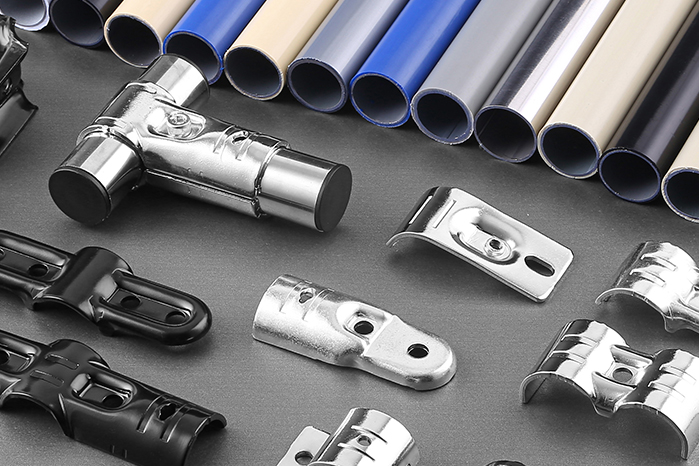
Our core expertise lies in the production of high-grade coated pipe systems. We utilize a sophisticated manufacturing process where the pipe is treated with a durable, multi-layer coating designed to withstand mechanical impact and chemical exposure. While many providers focus solely on the aesthetic exterior, we prioritize the functional integrity of the entire component to ensure long-term reliability in fluid-related applications.
Technical Specifications and OEM Capabilities
Our product range is engineered to integrate seamlessly into modular industrial environments. We provide a variety of specifications to meet the diverse needs of our partners:
- Material Composition: We use high-tensile cold-rolled steel as the base substrate, providing the structural rigidity required for heavy-duty industrial frames and fluid transport.
- Coating Versatility: Our internal pipe coating options include various thicknesses to suit different environmental stressors.
- Customization (ODM/OEM): We offer bespoke lengths and diameters, ensuring that our pipes fit perfectly into your proprietary racking or logistics designs without the need for on-site modification, which can compromise coating integrity.
Enhancing Your Supply Chain with JunYi Solutions
We recognize that for our B2B clients, the “Total Cost of Ownership” (TCO) is the most critical metric. While a standard untreated pipe may have a lower initial procurement cost, the expenses associated with premature replacement, downtime, and energy inefficiency far outweigh the upfront investment in a corrosion resistant pipe.
By partnering with JunYi, you are choosing a manufacturer that values technical precision and industrial durability. Our pipes are not only designed for fluid logistics but are also ideal for “Lean” manufacturing environments where cleanliness and durability are paramount. We don’t just supply parts; we provide the fundamental building blocks for efficient, long-lasting industrial infrastructure.
Whether you are looking for a reliable OEM partner to manufacture components for your global distribution network or need a specialized ODM solution for a complex fluid management project, we are ready to assist. Our team at JunYi is committed to delivering high-performance coated solutions that drive efficiency from the inside out.